When Maya Angelou died in 2014 at the age of 86, she was one of the towering figures of American culture and politics. Poet, author, civil rights activist, speaker, friend and advisor to figures of national and international importance, her career was, by any standards, glittering. And yet, her start was a decidedly inauspicious one. In the late 1960s she was persuaded to begin writing an autobiography and she went on to publish it in seven volumes, the latest one appearing in 2013, just a year before her death. I Know Why The Caged Bird Sings is the first volume and covers her childhood and coming of age. Her early life in Arkansas featured parental abandonment, overt racism, sexual abuse, discrimination and poverty. It is a sobering tale, and a testament to her immense ability, that someone with that kind of background could become such a great and important figure, well-known not just in the United States, but throughout the world.
 I chose this book for my 2018 Facebook Reading Challenge. The June theme was an autobiography, a tricky category since enjoyment can often depend on your feelings about the author. I also wanted to avoid titles that would most likely have been ghost-written. After thinking about it for some time, I chose this, the first volume in Angelou’s memoir series, and the one which is often considered to be the best. It can be read as a stand-alone.
I had read it myself many years ago; I have written on here before that at some point in my teens, I resolved to work my way along my local library bookshelves starting at ‘A’! I read the first five volumes (the fifth was published in 1986 when I would have been 18, so I imagine I did not read them all consecutively). I remember I enjoyed the book at the time, and parts of it were familiar, coming back to it so many years later, not least the horrific scene where she is raped by her mother’s lover. This aspect of Maya’s story, like all the other terrible instances of injustice she experienced, is told without self-pity (apart, perhaps from the toothache!) or sentimentality, and this, I think, is the mark of her greatness as a writer.
I loved also, the evocation of the setting – 1930s Arkansas is set out vividly before us, particularly the evangelical Christianity of the black community, the tense relations with their white neighbours on the other side of town, and the poverty of the community, scraping a meagre living in the most challenging of circumstances, from cotton-picking, domestic service or, in the case of Maya’s grandmother “Momma”, from running a small business.
I also loved the language – the Deep South comes across so profoundly in the words and phrases used by the author, such as the wonderful term “powhitetrash” to refer to the prejudiced white townspeople of Stamps who blight the lives of the black community with their bullying, their cruelty and their vulgar behaviour. And I loved the characters, from the young Maya, to her elder brother Bailey, whom she adored, to Momma, the starched Christian woman of steadfast values and brilliant business acumen. The author brings them alive so skilfully that they walk the pages of this book.
I Know Why The Caged Bird Sings is a must-read. I trust that it is on academic reading lists throughout the United States, but it should also form part of the historical context for any student of American history. It is not an easy read and the nature of the language definitely slows the pace (it took me twice as long to read as any other book of this size), but you would do well to read it slowly as the pace draws you into the languid lifestyle of the setting. Someone on the Facebook group listened to the audiobook, narrated by Angelou, herself, which sounds like a must-listen. Coincidentally, the book was also abridged for Radio 4’s book of the week recently, and that should still be available online. It was very good.
Highly recommended, should probably even be on everyone’s books bucket list.
If you have read Maya Angelou’s memoirs what impact did they have on you?
If you have enjoyed this post I would love for you to follow my blog and for us to connect on social media.
 It is extraordinary to think that this remarkable novel, still as popular and as shocking today as ever, was written when Mary was just 19 years old. The fact that she was such a literary talent is not surprising given that she was the offspring of the two famous intellectuals, Mary Wollstonecraft, philosopher and author of the seminal feminist work A Vindication of the Rights of Woman, and William Godwin, the radical political philosopher. In her lifetime, she was highly regarded as a radical writer and intellectual, as well as being the wife of the poet Percy Bysshe Shelley, whom she met and fell passionately in love with at the age of 17. Her reputation since her death, however, has been overshadowed by that of her husband’s, with whom she bore four children (three died in infancy), whose affairs and financial troubles she endured, and whose poems she edited both before and after his death. Percy Bysshe Shelley drowned at sea in 1822, just six years into their marriage when she was 25. She died at the age of 53 in London from a suspected brain tumour.
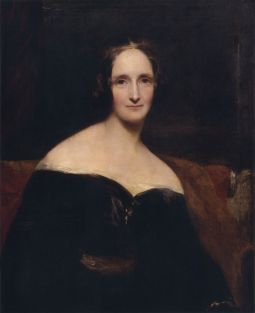 By any standards her life was remarkable and in the last few years her reputation has been revived and she has begun to be more widely considered as a formidable talent in her own right, rather than just a ‘one-book author’. Frankenstein has been a staple of English literature GCSE and A level syllabuses for years, but most of her other works have fallen out of print. A new biography, In Search of Mary Shelley: The girl who wrote Frankenstein, by Fiona Sampson was published earlier this year, some of which I caught when it was serialised in Radio 4 recently. What I heard sounded fascinating. Sadly it is not available on the BBC iPlayer at the moment.
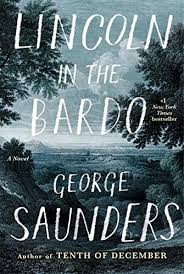
 The novel begins more or less where The Glorious Heresies left off with the central character, Ryan Cusack, embroiled ever more deeply in the Cork city underworld of drugs, money laundering and violence. McInerney has managed to keep Ryan’s character consistent – he has evolved in an entirely credible way – although, unlike in the first novel, there now seems almost no hope of the more refined, gentler side of his personality prevailing to choose a different lifestyle. He is more embedded in the criminal fraternity than ever but remains an engaging and attractive central character. If anything, his charisma grows as he matures; true, he does some pretty unpleasant things, and not always at the behest of his criminal masters, but you can see that McInerney, if this turns out to be part of a series of novels, is building him up to be the tormented gangster.
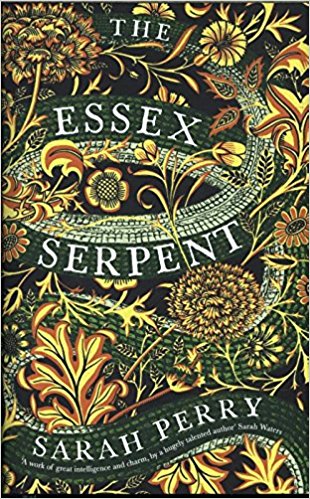 The book is set mostly in the fictional Essex village of Aldwinter in the 1890s and the action takes place over the course of a year. The central dynamic of the plot is the relationship between Cora Seaborne, a woman approximately in her late 30s, who at the start of the novel is newly widowed, and William (Will) Ransome, the local minister. Will is happily married to Stella and they have three children, while Cora is happily widowed! It seems hers was a fairly loveless marriage in which she felt constrained and imprisoned and her husband appears to have been somewhat older than her. The lack of intimacy in the marriage is indicated by the fact they had only one child, Francis, and that he is an unusual boy (for Cora “nothing shamed her as much as her son”), who is almost certainly autistic.
 The novel opens with our central character Maddy’s eighteenth birthday. She celebrates this with her mother and her nurse, Carla; Maddy suffers from severe allergies and lives an isolated existence in her hermetically sealed home, which she has not left for many years, so these two women provide the only relationships she really has. Maddy is home schooled, receiving almost all her tuition over Skype from various tutors. Occasionally, they are allowed to tutor her in person, but only after they spend a period of time in a decontamination unit in the house, to ensure Maddy does not come into contact with any pathogens or foreign particles which might harm her. Maddy’s father and older brother were killed in an accident when Maddy was a baby and she and her mother are therefore incredibly close.
 It’s basically a book about sickness, and the various forms it takes; the sickness of the troubled central character, Yeong-hye, whose decision to renounce meat from her diet is the catalyst to a catastrophic sequence of events; the sickness of some of her relatives who simply cannot accept Yeong-hye’s decision or who use it to perpetrate their own base acts; and the sickness in the society which degrades and dehumanises Yeong-hye. The insidious and malevolent control meted out to Yeong-hye over a period of many years (a control that was legitimised by social and cultural norms) leads to her attempting to starve herself in a desperate attempt to assert her autonomy, and this has explosive consequences
 This was April’s choice for my book club and one of the members described it as the best book we have read – she consumed it in virtually one sitting in the middle of the night when she was wide awake with jet lag! A fine endorsement indeed. It really is a marvellous book and, as I so often say on this blog, totally unfair that one so young should exhibit this much talent in a debut novel! It has also been shortlisted for the Baileys Women’s Prize for Fiction this year (winner to be annonced on 7 June), so it’s hot.


 What is so immediately intriguing about the title of the novel, of course, is that Holland is very, very flat. But In the Dutch Mountains imagines a world where the Netherlands extends much further south of its modern borders to northern Spain and the Pyrenees (hence the Dutch mountains). The narrator is himself a Spaniard, a civil servant who not only relates the story, but also philosophises on the processes of writing and story-telling: a story within a story. The main characters in the tale are Kai and Lucia, a slightly other-worldly circus couple, remarkable for their physical perfection, who are relieved of their jobs (because times have moved on and audience tastes have changed) and find themsleves travelling south to look for work. Kai is kidnapped and Lucia sets out on a journey to find him, accompanied by an old woman she meets on the way who agrees to drive her to find her lover.
