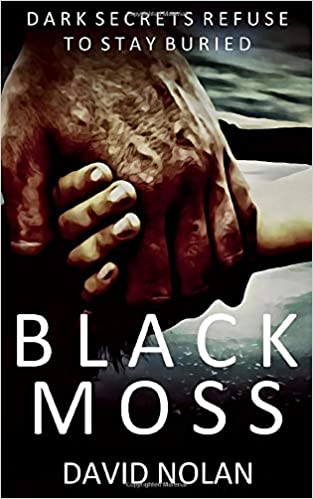
This was one of my Book Club choices and I read it on a weekend away with some girlfriends (the aforementioned Book Club) for our first Annual General Meeting!! I downloaded it to my Kindle, perfect as it took up less space for our hand luggage only trip. We chose it because it has a local flavour (to us), set in Manchester, and because we hadn’t done a thriller for some time. It is not a book I would ordinarily have chosen (but isn’t that the point of book clubs?); thrillers are not usually my thing, although I have to say that I am usually gripped when I read one (the good ones anyway). Whilst I would not describe it as my read of the year, I did enjoy it, it engaged me and I thought it was a pretty decent story – I did not predict the ending.
 The book jumps back and forth in time between the present day and April 1990. In the present day we meet a middle-aged Danny Johnston, a long-in-the-tooth presenter of investigative television documentaries. He is past his peak professionally and clearly has some deep-rooted, well-suppressed emotional difficulties; the book opens with him crashing into a tree whilst drunk. He lives an empty life alone in London and is borderline alcoholic. His accident is well-publicised in the media and as a result he loses his television contract and is let go by his agent. With nothing to keep him in London he decides to return to the north, to Manchester where he grew up and where he began his career as a local radio reporter.
When he is back in Manchester Danny decides to follow up a police case he was involved in that was never solved. It was April 1990 and the riots at Strangeways prison dominated the media for weeks. The ‘occupation’ of the prison by the inmates lasted twenty-five days. At around the same time, the body of a young boy is found at Black Moss reservoir just outside Oldham. Danny is assigned to report on the case, the more senior reporters having their attention fully occupied by Strangeways, and happens to be the first reporter on the scene. He catches a sight of the boy’s body as a breeze lifts the covering on it, and sees that it has been partially taped up, presumably by the killer. This detail is omitted from the public statements made by the police which makes Danny feel there is more to this than the average homicide. Danny starts to build a relationship with the chief investigator on the case Detective Inspector Smithdown who takes Danny into his trust, he being one of only two reporters showing any interest in the case. The other is a reporter from the Oldham Messenger called Kate, who also happens to be the daughter of DI Smithdown.
As a disgraced middle-aged ex-broadcaster Danny gets in touch again with Kate. He learns that her father is still alive and he goes to see him. They talk about the unsolved case of the boy at Black Moss and Danny feels it is time for him to try and resolve it once and for all. It sets him on a journey which will expose him to a dark underbelly of historic child abuse in the Manchester area and police corruption. It will also force him to face aspects of his past that he has suppressed all his life and to learn things about his childhood that go part way to explaining his present day problems.
I enjoyed the book and felt the pace was good. It was a decent story to get your teeth into and deals with some important issues. Here in Manchester and the north west of England more widely we have still to come to terms with some dark facts of recent history where children, particularly those living on the margins of society, were abused. Whilst this book is fictional, I think it is a brave piece of work and part of the catharsis which it will be necessary to experience before we can all put this chapter behind us. I understand that police officers and child protection professionals were consulted in the writing of it.
Well worth a read, and a local author (to me anyway!) to boot.
I find thrillers a bit hit and miss – have you read any good ones lately? I also like Cath Staincliffe.
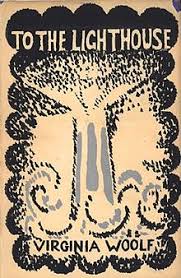 I had that very experience recently with my book club when we decided to read To The Lighthouse by Virginia Woolf. Some of us had read it before (though years earlier) others had not read it at all. But even those of us who had read it before could not remember very much about it! I read it when I was studying for my English degree 30 years ago; I would probably have got through most of Virginia Woolf’s books in a very short space of time, because that was what my degree entailed – reading lots and lots of books very quickly! I always remembered that To The Lighthouse was my favourite, but I could not honestly have told you what happens in it, except that the journey to the eponymous lighthouse was about something desired more than something fulfilled.
 This may have been unremarkable and probably happened more than we care to imagine, but for what happened next: Henrietta’s surgeon had noticed how rapidly her cancer cells had grown, but when George Gey, the scientist to whom he had sent the cells, received them, he found that they divided and reproduced at a rapid rate, and, most remarkably, seemed extraordinarily robust outside their host, unlike all other cells he had dealt with. Gey soon forwarded cells to other colleagues working in the field and they too found the ability of these cells to thrive truly remarkable. HeLa (the name given to the cells) was born and they quickly became an essential part of research worldwide into therapies not just for cancer but for polio and HIV to name but a few. It is thought that around 50 million tonnes of HeLa cells have been cultivated since 1951.
 I was tempted to go for Haruki Murakami – after reading
 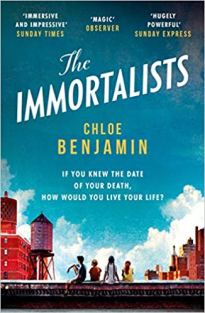 The novel begins in 1969 with the four children of the Gold family – Varya, Daniel, Klara and Simon – visiting a fortune-teller in her grimy downtown New York apartment, who is said to be able to predict the date of a person’s death. The mystic consults each child privately about their fate. Their reactions vary; Daniel, the second oldest, for example, says he thinks it is all rubbish. The younger children seem more vulnerable and more preoccupied, particularly Simon, who at this point is only seven years old, and who is told that he will die young.
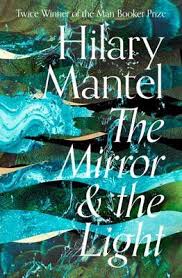 I think we can believe the hype – this is surely a writer at the top of her game! A few lucky critics who have had a preview have already tipped it for this year’s Booker Prize (parts one and two both won in 2009 and 2012). I am a huge fan of Mantel, ever since I read “A Place of Greater Safety”, a novel about the aftermath of the French Revolution. It was the book that really got me back into reading after I’d finished my English degree – I was all ‘read-out’ by the time I graduated, so this book saved me!
 There are many other books to get excited about this year. Isabel Allende’s latest book A Long Petal of the Sea was published in English last month. It is a story about escapees from the Spanish Civil War arriving in Chile in 1939, their evacuation having been organised by the great national poet Pablo Neruda. I was lucky enough to attend a talk Isabel Allende gave in Manchester (with Jeanette Winterson!) a couple of weeks ago and she was every bit as impressive and inspiring as I expected her to be. AND I got a signed copy of the book!
 By the strangest of coincidences, I have also just read two books which also explore issues of race and class. Rebecca Skloot’s non-fiction work The Immortal Life of Henrietta Lacks, and The Water Dancer by Ta-Nehisi Coates. Skloot’s book is a detailed and complex account of one woman, Henrietta Lacks, an African-American woman from Virginia who died in 1951 from aggressive cervical cancer. The cancer cells from her body were special and unique because they were the first ever cells that were able to not only survive outside their host, but were able to continue to thrive and reproduce, at a rapid rate. This perhaps accounts for the very aggressive nature of Henrietta’s disease. Scientists used these cells, known universally as HeLa cells, to create trillions and trillions more of them, which have been used ever since, worldwide and have been directly responsible for the development of life-saving drugs and treatments, for example for polio. The key to the story, however, is that Henrietta died without ever having been advised about or consenting to the use of her cells in this way, neither did her family, and none of her surviving relatives have been given any financial compensation. What makes the story all the more shocking, however, is that Henrietta died at a time of segregation, and almost certainly did not receive the same level of care and respect as a white woman would have done. I will write more about this book in a future post because it is a fascinating story.
 The other book I have been reading, The Water Dancer, concerns the story of Hiram, a black slave also in Virginia in the mid-1800s. His mother was also a slave, but his father was a slave-owner, who allowed his son some elementary education after his mother’s death and then, when he was in his teens, gave him the special status of being the personal servant to his white half-brother, Maynard, the heir to their father’s estate. Hiram is also the grandchild of legendary slave Santi-Bess, one of the original transported Africans who is said to have had magical powers (Conduction), although it does not become entirely clear what these are until towards the end of the book. The first significant glimpse of this is when, whilst chaperoning Maynard on a drunken night out, the two young men somehow end up in the river. Maynard drowns but Hiram somehow emerges alive. The events which follow Maynard’s death eventually afford Hiram the opportunity to escape slavery via the Underground and he soon becomes an agent of that cause. It is not a straightforward choice for him, though, as he is forced to confront traumatic memories of his mother, who died when he was very young, and to face the many complex facets of slavery, its consequences, its victims and what it means to be free.
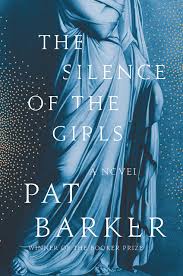 The Silence of the Girls has been critically-acclaimed and was shortlisted for last year’s Women’s Prize for Fiction. I really, really wanted to love this book, but I’m afraid I didn’t. It could be that the timing was wrong – December for me was mad busy so I read the book in short bursts over a longish period when I was quite stressed. I don’t think I gave it the time and attention it deserved. But then, neither did it really grab me when perhaps it ought to have done.
 This book grabbed me by the throat right from the outset; I listened to it on audio (fantastic performances from the actors Julia Whelan and Kirby Haborne, by the way) and simply could not ‘put it down’. I got a lot of exercise in January, because going for a walk became an excuse to listen to a few more minutes’ worth!
 Julia's books