It’s been a while since my last post. I’m normally pretty organised when it comes to planning my blog posts, and fairly diligent about posting regularly. School holidays and busy work periods can make things tricky but generally I’m a committed and regular blogger. I imagined that during this period of global lockdown due to Covid-19, I would have much more time to post regularly. That did not quite happen, of course, what with having the whole family at home all the time, and doing much more cooking and cleaning than I do normally (‘help’ sometimes creates more work!). I was getting on okay though, appreciating the facts of our situation: we were all together, we were well, our income was fairly secure, we had a roof over our heads, those basics were in place and so all was good.
After Easter, though, I noticed a real dip in my mood. I cannot really explain it because nothing specific happened. A few things upset or angered me – the ever-increasing death tolls on the nightly news, the increasingly grave news about the economy, the anxiety about how countries with weaker health systems than ours would cope (some of them rather better than the UK it turns out), events I had booked for the coming months were gradually cancelled. I also find myself getting irrationally cross about people who seemed to believe that the measures designed to protect us all didn’t actually apply to them. But, those things didn’t seem to explain the more general malaise I found myself experiencing. I struggled for motivation. Even with at least a million things I could have been doing I felt at a loose end. And when I heard the stories on the television of people who had lost loved ones to the virus, I found the complicated grief I felt about my mother’s death last Autumn, resurfaced in ways I had not expected. Some days I felt relief that she wasn’t here to experience or be worried about getting the disease (she would certainly have died had she got it as she was very unwell), but at the same time I felt, selfishly, like screaming, hey what about the rest of us who lost people recently, NOT due to Covid-19. It was all very complicated.
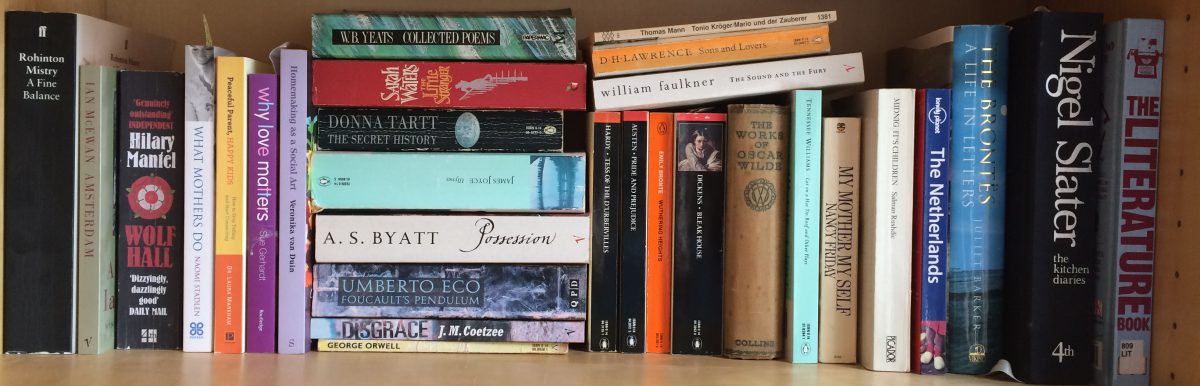
I even found it difficult to read. I wasn’t able to focus. I bought Hilary Mantel’s The Mirror and the Light at the start of the lockdown, thinking that long weeks of no socialising would give me plenty of opportunity to work my way through the hefty tome. Alas not. I have not even picked it up yet.
Thankfully, I can feel my mojo starting to return this last week or so, just as suddenly and as inexplicably as it went away. To what do I credit this change of mood? The following:
 Marian Keyes – Grown Ups to be precise. It was my book club’s choice the last time we met in person and although it was probably not a book I would have picked up it was the most perfect tonic, especially as I listened to it on audio, with Marian’s wonderful narration.
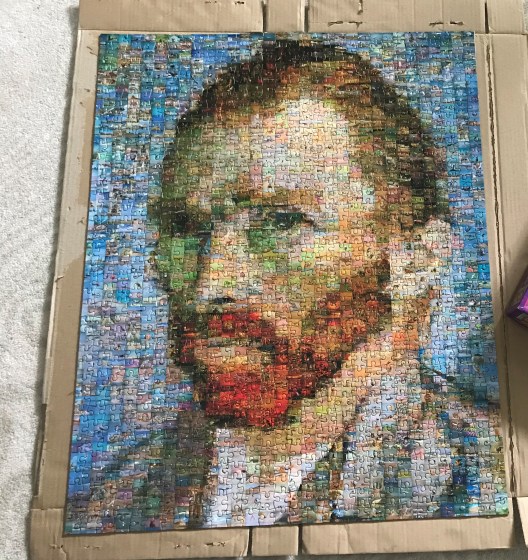
- Vincent Van Gogh – many years ago my husband bought me a 1000 piece Photomosaic jigsaw puzzle of a Van Gogh self-portrait. If you’ve never seen these, they are very clever, the larger image is made up of hundreds of tiny little photos, fiendishly difficult, but completely addictive. I had never done that jigsaw, but seemed to decide that ‘now’ was the time. Many dinners were burned or delayed as I found it difficult to drag myself away from it. We had to eat round it as it sat at the end of the dining table, a fortnight-long work in progress. There was one near-disaster when the cat, in a last desperate attempt to get my attention to feed him, leapt up on the dining table and almost sent several hundred carefully colour-organised pieces crashing to the ground. Lucky for him, only a few pieces fell and Ziggy the cat lives to fight another day!
- Withdrawal from social media – I’m not a big social media user, but I dabble.I found I really couldn’t take much Facebook though and Twitter was a total no-go – way too much anger and too many chronically-opinionated people.
- And finally, free arts online – more than anything I am missing the arts (hope that doesn’t sound too pretentious). The audience with Hilary Mantel I had booked for April was cancelled, as was West Side Story at Manchester’s Royal Exchange, the Hay Festival, the Thom Yorke gig in Manchester next month as well as various performances my kids were involved with and a couple of work trips to London with exhibitions to be taken in. Thank goodness for the National Theatre’s weekly NT Live recordings, the virtual tours of museums around the world, and Radiohead classic concerts on YouTube.
It hasn’t been all play, of course, I only dabbled with all of the above. I got a bit sick of hearing lifestyle-y type people saying how bored they were and were looking for things to do. I have felt busier than ever, my work has been emotionally quite demanding, and it’s never good hearing from over-achievers in those circumstances.
So, like most people, I am muddling along, looking forward to some normal things and trying to make the best of the situation. And hopefully getting back to an even keel on the blogging front.
I hope you are all doing okay.
 This is the third book in Andrew Taylor’s series of Marwood & Lovett novels. I have thoroughly enjoyed the first two books,
  The premise of the story is very simple: So-nyo is a wife and mother to five children, all of whom are now grown-up and living their lives in different parts of the country (South Korea). So-nyo lives a very simple fairly rural life with her husband at the family home, where there are many privations. The place is almost a throwback to a bygone era. So-nyo’s eldest son, Hyong-chol, lives in Seoul with his wife and family and it is while his parents are on their way to visit him (to celebrate the father’s birthday) that his mother goes missing; she was holding her husband’s hand on the busy underground station platform one moment, then she seemed to slip from his grasp and just disappeared into the crowd.
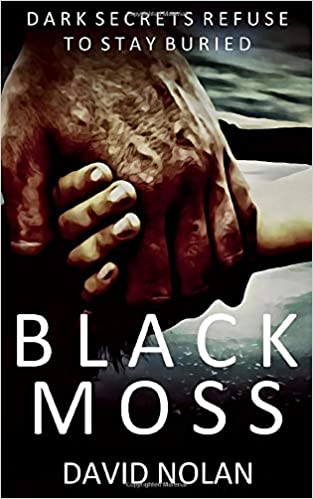 The book jumps back and forth in time between the present day and April 1990. In the present day we meet a middle-aged Danny Johnston, a long-in-the-tooth presenter of investigative television documentaries. He is past his peak professionally and clearly has some deep-rooted, well-suppressed emotional difficulties; the book opens with him crashing into a tree whilst drunk. He lives an empty life alone in London and is borderline alcoholic. His accident is well-publicised in the media and as a result he loses his television contract and is let go by his agent. With nothing to keep him in London he decides to return to the north, to Manchester where he grew up and where he began his career as a local radio reporter.
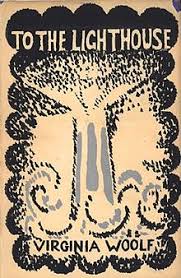 I had that very experience recently with my book club when we decided to read To The Lighthouse by Virginia Woolf. Some of us had read it before (though years earlier) others had not read it at all. But even those of us who had read it before could not remember very much about it! I read it when I was studying for my English degree 30 years ago; I would probably have got through most of Virginia Woolf’s books in a very short space of time, because that was what my degree entailed – reading lots and lots of books very quickly! I always remembered that To The Lighthouse was my favourite, but I could not honestly have told you what happens in it, except that the journey to the eponymous lighthouse was about something desired more than something fulfilled.
 This may have been unremarkable and probably happened more than we care to imagine, but for what happened next: Henrietta’s surgeon had noticed how rapidly her cancer cells had grown, but when George Gey, the scientist to whom he had sent the cells, received them, he found that they divided and reproduced at a rapid rate, and, most remarkably, seemed extraordinarily robust outside their host, unlike all other cells he had dealt with. Gey soon forwarded cells to other colleagues working in the field and they too found the ability of these cells to thrive truly remarkable. HeLa (the name given to the cells) was born and they quickly became an essential part of research worldwide into therapies not just for cancer but for polio and HIV to name but a few. It is thought that around 50 million tonnes of HeLa cells have been cultivated since 1951.
 I was tempted to go for Haruki Murakami – after reading
 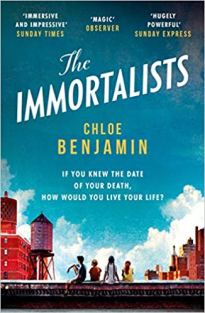 The novel begins in 1969 with the four children of the Gold family – Varya, Daniel, Klara and Simon – visiting a fortune-teller in her grimy downtown New York apartment, who is said to be able to predict the date of a person’s death. The mystic consults each child privately about their fate. Their reactions vary; Daniel, the second oldest, for example, says he thinks it is all rubbish. The younger children seem more vulnerable and more preoccupied, particularly Simon, who at this point is only seven years old, and who is told that he will die young.
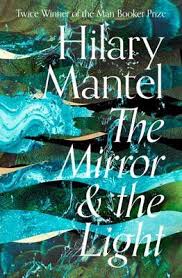 I think we can believe the hype – this is surely a writer at the top of her game! A few lucky critics who have had a preview have already tipped it for this year’s Booker Prize (parts one and two both won in 2009 and 2012). I am a huge fan of Mantel, ever since I read “A Place of Greater Safety”, a novel about the aftermath of the French Revolution. It was the book that really got me back into reading after I’d finished my English degree – I was all ‘read-out’ by the time I graduated, so this book saved me!
 There are many other books to get excited about this year. Isabel Allende’s latest book A Long Petal of the Sea was published in English last month. It is a story about escapees from the Spanish Civil War arriving in Chile in 1939, their evacuation having been organised by the great national poet Pablo Neruda. I was lucky enough to attend a talk Isabel Allende gave in Manchester (with Jeanette Winterson!) a couple of weeks ago and she was every bit as impressive and inspiring as I expected her to be. AND I got a signed copy of the book!
