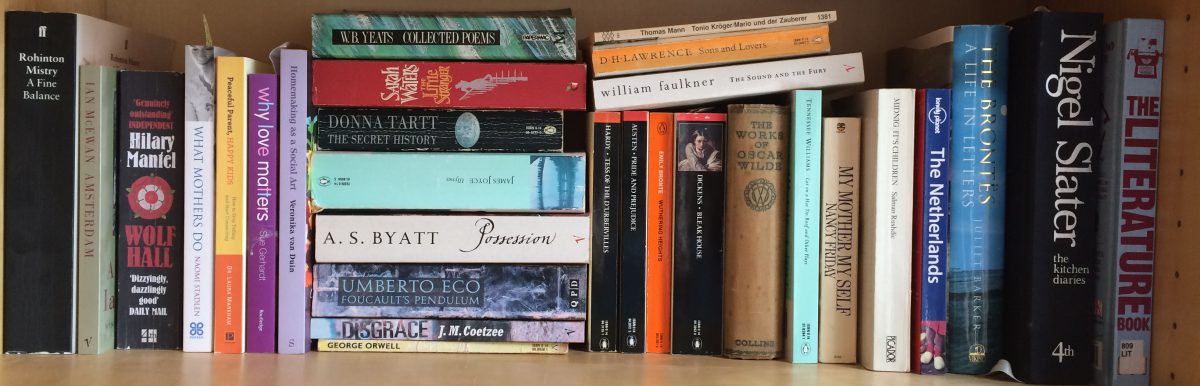
I plan my reading a good few weeks in advance, partly because planning is what conscientious bloggers are supposed to do (so I’m told!), but also because I always have such a substantial TBR (to be read) pile, that the only way I can excuse my excessive book-buying is to write down my intention to read them all! It seems that for the next few weeks I am planning to read a number of what might be described as feminist books, starting with the one I have just completed and which I’m reviewing here today.
WE: A Manifesto for Women Everywhere demonstrates its feminist credentials by encouraging a “sisterhood” in which women support and encourage one another. That is quite an ambition, given that we live in a society which often seeks, or so it seems to me, to set women against and in competition with one another. Anderson and Nadel deplore the scandal of inequality in our society which they seek to counter by encouraging us all to strive for a fairer and more just world for ourselves and for others.
 I am an admirer of Gillian Anderson, not since her X-Files days, but since watching The Fall, the hugely popular television drama about a misogynistic and brutal serial killer in Northern Ireland, in which Anderson played the beautiful, enigmatic, but also rather damaged DSI Stella Gibson. The drama ran for three series between 2013-2016 and I was hooked. (It also starred Jamie Dornan, which helped). Jennifer Nadel, Anderson’s co-author, is a former journalist, writer and activist. Both women are open about their experiences of depression and poor self-esteem, despite their hugely successful careers and enviable lifestyles, and this book is their account of recovery and a ‘guidebook’ for other women who may be suffering from mental health issues.
To that extent the book is very much a self-help guide, but it is also provides a roadmap for women to avoid depression, suffering and, in their words, live “a more meaningful life” by offering nine principles for living. Before discussing the nine principles, the authors set out four essential daily practices which, they say, we should all be incorporating into our lives in order to achieve greater peace. These are: showing gratitude, being gentle with ourselves and others, taking responsibility for self-care, and meditation.
“Taking care of yourself emotionally, physically and spiritually is a profoundly political act”
The nine principles are: honesty, acceptance, courage, trust, humility, peace, love, joy and kindness. Each of the principles is discussed in a separate chapter and there are exercises and instructions readers are invited to undertake to get the most out of the book. There are also individual paragraphs from each of the authors scattered throughout where they reflect on their own experiences. They rail against fear as a barrier to woman achieving happiness and their potential and they discuss at length what they call the “Toxic Cs”, the five bad habits of the ego – Comparing, Criticising, Complaining, Controlling and Competing. They offer instead Compassion, Cooperation and Connection.
There is a great deal in this book which makes sense. It is well-written, well set-out, the motivational quotes are well-chosen and I found many of the exercises useful. I liked its gentle approach; some self-help books can come across as self-righteous and are self-congratulatory exercises by an author wanting to tell us how well they have done. This is not like that. I have already given this book as a gift to a dear friend who I thought could benefit from reading it. I think its audience could be clearer: it talks about “addiction” as one of the ways women can sabotage themselves. For most women who read this, that is not going to mean drug or alcohol addiction, I imagine, but it could apply to weight problems or other subtler ways that we become reliant on repetitive behaviours as a coping strategy. Some women who may benefit from the book may therefore not see it as for them.
I enjoyed reading this. I borrowed it from the library but think I will buy a copy as I could see myself dipping into it quite regularly. Recommended.
Do you find self-help books useful?
If you have enjoyed reading this post, please subscribe to the blog and get future posts straight to your Inbox. I would love if we could also connect on social media.
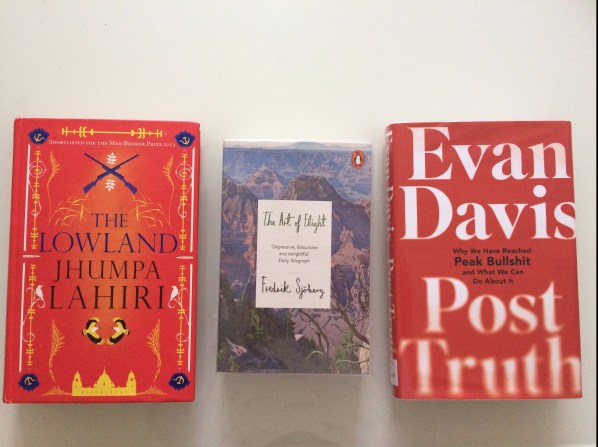
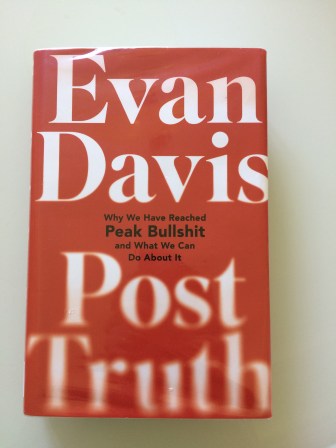 This is actually my July reading challenge book, which was to borrow something from the library. I read it in virtually one sitting on a train journey to London. For a weighty non-fiction book it’s very readable and the writing is resonant of Evan’s relaxed and articulate presenting style. There were parts where I could almost hear him reading it out. There are many references to the help and support he has had in the acknowledgements, so I’m sure he had plenty of research assistance (how could he not – with Newsnight, The Bottom Line and Dragon’s Den he is a very busy fellow!), but the authorial voice is definitely authentic, and I would bet it isn’t ghost-written, which just makes me love him all the more!
 I fell in love with Jane Austen in my teens, and I have never fallen out of love with her. The first book I read was Pride and Prejudice, and I remember I much preferred this colourful collection of sisters to Louisa May Alcott’s in Little Women! But it wasn’t until I read Emma for my English Literature A level that I really ‘got’ Jane Austen and I was blown away. Even now when I read Austen I still see her writing as impossibly brilliant. And then when you think about the life she led, her modest rural upbringing, her insight into human character is barely plausible. After Emma I quickly gobbled up all of Austen’s work (sadly, there is too little of it) and my favourite is probably Mansfield Park.
 Children these days have so many distractions which can take them away from reading; they seem to be so busy with out of school activities, have more homework than ever before and, of course, there are the digital distractions…don’t even get me started. But reading is such an important activity for them:
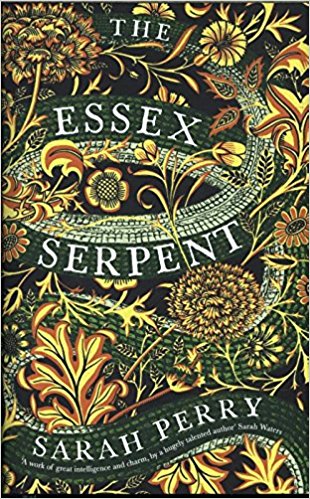 The book is set mostly in the fictional Essex village of Aldwinter in the 1890s and the action takes place over the course of a year. The central dynamic of the plot is the relationship between Cora Seaborne, a woman approximately in her late 30s, who at the start of the novel is newly widowed, and William (Will) Ransome, the local minister. Will is happily married to Stella and they have three children, while Cora is happily widowed! It seems hers was a fairly loveless marriage in which she felt constrained and imprisoned and her husband appears to have been somewhat older than her. The lack of intimacy in the marriage is indicated by the fact they had only one child, Francis, and that he is an unusual boy (for Cora “nothing shamed her as much as her son”), who is almost certainly autistic.
 If, like me, you find yourself a little nostalgic for an era when travel meant slowing down, getting to know a place and its people (rather than just taking a selfie with a local and posting to Instagram), and immersing yourself in the new environment, then Dervla Murphy could be the travel writer for you. In On a Shoestring to Coorg, Murphy travels for the first time with her five-year old daughter, Rachel. They travel scarily light (I would take more stuff on a day out when my kids were younger!) with very little money and are dependent on the kindness and hospitality of people they meet, including a number of British ex-pats, who have made India their home in the post-colonial era.
 We’re all on a budget and we’re all busy, so why would you make the effort to go to an independent bookshop when, with a couple of clicks, you can get what you want from the comfort of your armchair and have it delivered, and probably for a discount on the jacket price? Well, as they say, use it or lose it!


 The novel opens with our central character Maddy’s eighteenth birthday. She celebrates this with her mother and her nurse, Carla; Maddy suffers from severe allergies and lives an isolated existence in her hermetically sealed home, which she has not left for many years, so these two women provide the only relationships she really has. Maddy is home schooled, receiving almost all her tuition over Skype from various tutors. Occasionally, they are allowed to tutor her in person, but only after they spend a period of time in a decontamination unit in the house, to ensure Maddy does not come into contact with any pathogens or foreign particles which might harm her. Maddy’s father and older brother were killed in an accident when Maddy was a baby and she and her mother are therefore incredibly close.
