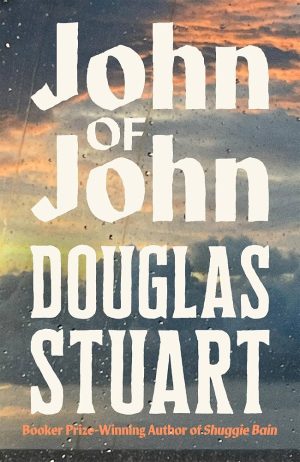
Last week I shared some photos of my wonderful summer holiday in Scotland where I was fortunate enough to spend some time on the island of Harris and Lewis in the Outer Hebrides. I started reading this book while I was there and was then delighted to see that it has been shortlisted for this year’s Booker Prize. I am not surprised and would have been questioning the decisions of the judging panel if it had been omitted!
The novel is set in the 1980s and the main character is Calum (Cal) Macleod, who is returning home from Edinburgh, where he has been a student studying textiles, at the behest of his father John (Cal is actually named after his father but prefers to use his middle name), who tells him that his grandmother’s health is failing. John lives with Cal’s grandmother Ella, even though she is actually his ex-mother-in-law, John having divorced Cal’s mother Grace some years earlier. Ella owns the croft on which the family depends for a living. Cal himself is deep in debt, from his studies, and unable to find a job, so although he is reluctant to return home, in reality he has few choices.
Also, Cal is gay, and has found his student life in Edinburgh very freeing in that respect (though, as we will learn, very isolating in others). He has not come out to anyone at home and is afraid that he will be cast out by his father and by the deeply religious community on the island if he does. (When we visited Harris and Lewis, we arrived on a Sunday and everything was closed, and that is 40 years further on from this book.) Cal has a poor relationship with his father and the novel opens with him taking the long journey home, by bus, ferry and another bus, both dreading and putting off his arrival, choosing to spend his first night back on the island drunk in Tarbert, the ferry port, rather than at the family home.
As soon as he arrives at home, John berates his son – for not coming home earlier (word has got around that he arrived on the island the day before), for his haircut and his tardy ways. Ella does her best to calm troubled waters, but John is a stubborn man and he never misses an opportunity to criticise his son. Cal is put to work instantly, helping his father with the weaving (an activity that is meant to bring in extra money to the household, but barely pays for itself now) – it is the one area where Cal and John can begin to bond. Cal recognises his father’s ‘feel’ for the work and his eye for colour in the tweed fabrics he creates. We begin to see where Cal gets his talent for textiles and some areas of common ground slowly start to emerge between the two men.
The novel recounts the long and tough road that their relationship will need to navigate and the compromises that Cal in particular will need to make. Douglas Stuart also begins to peel back the layers of the community, the undercurrents that are suppressed in service to the religious imperatives, how the dreams of the young people on the island are impoverished due to the lack of opportunity and how when there is no hope people turn to other ways to numb the pain of their existence.
This novel is at times rather dark and hopeless, but there is something positive in Cal’s acceptance of his father, even if his father will struggle to accept him, and the small acts of resistance that some of the characters exercise just to be themselves. The novel answered many questions for me about the beautiful island I visited, so remote and disconnected from the pressures of urban life, but while I was there I found myself wondering about the young people brought up there, what they wanted, how they expressed themselves. I sincerely hope things have changed for them.
This is a powerful and beautiful novel that must be a strong contender to win the Booker Prize for a second time for its author.

