Books to look out for this Spring

The freaky February weather is behind us, those treacherous early Spring storms seem to have passed, and there are signs of Spring – things are sprouting in my garden (apart from all those snowdrops I planted last Autumn – hmm!) and it is warm enough to take the thick down lining out of my winter coat. The London Book Fair has been taking place this week, with all those publishers deciding what we are going to be reading in the coming months, and there are some fantastic new books to look out for. With the Easter holidays coming up in the next month or so, you may be looking for something to read yourself. Here are some of the newly published or soon to be published books that have caught my eye

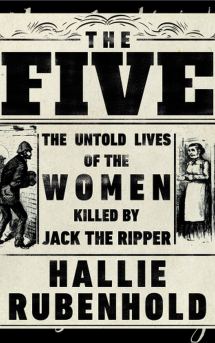
The FiveThe Five by Hallie Rubenhold

This book has been getting a lot of coverage and tells the stories of the women raped and murdered in Victorian London by Jack the Ripper. Reclaiming a space for these women, the author seeks to make them more than just victims.


BookwormBookworm: a memoir of childhood reading by Lucy Mangan

I have been reading Lucy Mangan’s columns in The Guardian for years and have always loved her writing style. I have also always identified with the passion for reading she found she had as an introverted child. This looks like a nice read and one that will take you back to characters and places you may also have loved as a child.


SpringSpring by Ali Smith

The third in Ali Smith’s seasonal quartet. Autumn was published in 2016 and was shortlisted for the Man Booker in that year. Winter was published in 2017 (still on my TBR list) and here we now have Spring, due for publication on 28 March. It concerns the lives of three people living in a time of war in a country facing a crisis of identity. Remind you of anywhere?


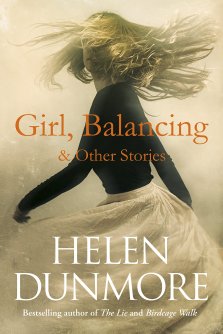
girl balancingGirl, Balancing by Helen Dunmore

Having just completed Birdcage Walk, I’m really keen to get into some more Helen Dunmore and this collection of short stories looks like a perfect one to take on holiday. I don’t read very many short stories so this will be a bit of a departure for me.


LannyLanny by Max Porter

Just read a review of this and it sounds so intriguing that I can’t wait to get hold of it. Set in a small village not far from London, this book is about the many residents past and present who have lived there, and about the culture, history and folklore of the place, embodied by the slumbering woodland spirit Dead Papa Toothwort.


That should keep me going for a while!

What books are you looking forward to reading this Spring?

If you have enjoyed this post, I would love for you to follow my blog. Let’s also connect on social media.

YA book review – “The Hurting” by Lucy van Smit

Regular readers of this blog will know that I am a huge fan of literature for children and young people and that I review such books on here from time to time, not just because I think it’s good for ‘grown-ups’ to delve into these genres (you’re missing out if you don’t), but also because I know many of you often want recommendations for the youngsters you live with.

I picked up The Hurting from my local library recently (most now have online catalogues with a ‘What’s New’ section so you can browse new titles) and libraries are great for young readers because, unlike me, they often make a quick decision about whether they like something or not and if a book is worth their time, so it can be frustrating when they toss something aside after half an hour that you’ve paid £6 plus for!

Lucy van Smit is a first-time author and the publisher, Chicken House Books, has a good reputation for quality fiction for young people. It’s a YA book, for 15+ I’d say, as there are sexual references, some swearing, quite a bit of peril, and some challenging themes – cancer, alcoholism, death of a parent – all high-grade emotional stuff that teens seem to love! For me, it’s not the best YA book I’ve read this year, but then I’m judging it against The Disappearances, which I think is a phenomenal book, and Just Fly Away, which had a more concise and coherent plot and was for me more enjoyable. There is a lot going on in this book, perhaps too much.

The Hurting imgNell is in her late teens and lives with her father, a very religious alcoholic, and her sister, Harper, who has cancer. They are from Manchester but moved to Norway, ostensibly for Harper’s medical treatment. The girls’ mother, we learn, left when they were young and they have had no contact since. Nell is a confused young woman; she is the primary carer for her sister, their father either working or incapable most of the time, and she wants to be a singer-songwriter back in Britain, but finds herself cut off from any possibility of making a career in that field. She attends a local school where she experiences bullying and isolation. She decides to go back to the UK, without her family’s knowledge, for an audition, but gets into a spot of bother en route and meets Lukas, a handsome but mysterious boy. At first it appears he rescues her but we learn later that he in fact engineered the whole episode in order to entrap her.
There is an instant attraction between Nell and Lukas and Nell quickly falls in love with him. Lukas pursues Nell (and yes, that is the right word), and she is drawn into what can only be described as an edgy relationship with him. It turns out that Lukas is the son of the late Harry Svad, a Norwegian minerals entrepreneur (and Nell’s father’s employer who, mysteriously, her Dad seems to hate). Svad, along with his wife Rosa, has recently been killed in a helicopter crash. Lukas was not his biological son, however; he was discovered as a very young child living in a wolf pack in an area of forest Svad wanted to mine. Svad ‘rescued’ and adopted him, but Lukas cannot forgive him for killing the wolves he loved, and says he was also treated cruelly. This draws Nell further into a web of sympathy. Lukas has a baby brother, Pup, who, now an orphan, is in the care of social services. Lukas wants to adopt him when he turns 18 (very soon) but feels he needs to get Pup back now before events spiral out of control, and he says that by the time they catch up with him, he’ll be 18 so he’ll be able to adopt without a problem. By this stage he is well able to coerce Nell into kidnapping Pup from the foster carer.

Still with me? Yes, I struggled to suspend my disbelief too, but I suspect some young people would not! Nell goes along with Lukas’s plan, they kidnap the baby and then run away, back to the grand, extraordinary but isolated Svad home, via stolen car and light aircraft. They are pursued of course, though Lukas is careful to shield Nell from too much contact with the outside world where CCTV images of her are being splashed across news screens.

Spoiler alert: once at the Svad home, Nell begins to realise that Lukas has tricked her, that he actually wants to kill Pup, and frame her, and yet she cannot reconcile these facts with her intense passion for Lukas, the only person who appears to have shown her any love. His behaviour frightens her sufficiently, however, that she decides to escape with Pup (who it turns out is her half-brother, his dead mother, Rosa Svad, having also been Nell’s estranged Mum) but this involves a perilous trek through dangerous wolf-inhabited forest. With a baby.

Yes, there is a lot going on here; rather too many events, strands and themes for my liking, and I felt a bit overwhelmed. It rather lost me in the last third of the book, I’m afraid. However, for teens who need a lot of stimulation to keep their interest, this may suit. As I said, I found it hard to believe in the events, but, again, teens who like a touch of fantasy may be able to lose themselves in it and be more forgiving about the lapses in credibility. There were, in my view, some editorial oversights which annoyed me (including a frustrating number of typographical errors, grrr!), but most teens will overlook these. I loved the evocation of place – Norway provides a great setting for the book – and the author does well to convey the sense of threat as well as beauty in the natural world. Nell is a great character and her vulnerability and confusion, her difficult life, and her thwarted dreams may have a resonance for young people. Also, her journey, her survival against the odds and her ability ultimately to overcome her fears, some seemingly insurmountable obstacles and the effects of her first-love blindness, make her a positive role-model.

Recommended for the young people in your life, even if it wasn’t quite for me.

Have you read any good YA titles recently?

If you have enjoyed this post, I would love for you to follow my blog. Let’s also connect on social media.

Time for a little light reading

Regular followers of this blog will know that I have recently been reviewing each of the Man Booker shortlisted books. It’s a month since the winner, Anna Burns’s Milkman, was announced, and I still haven’t finished all six books – I don’t know how on earth I thought I’d get them all read before the gala dinner! I’ve found them all pretty heavy going, to be honest, which is perhaps why it has taken me so long. And, I have to say, it’s been a bit bleak too!

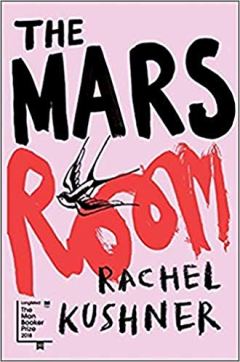
The Mars Room imgSo much so that I had to have a break from all the heaviness to read something a little more uplifting and which didn’t tax my brain quite so much. I wasn’t very well last week and simply couldn’t face into The Mars Room (next on my Man Booker list) – if you have heard it is bleak, well it is! So far (not quite finished it yet). So, with my blanket, hot water bottle and cups of tea to hand I settled onto the sofa and read Rachel Joyce’s The Music Shop cover to cover in one day. I simply could not put it down.


The Music Shop imgThis book came to my attention last year. I really liked the sound of it and recommended it in one of my ‘what to look our for this season’ blogs, so it was on my TBR list. Then I saw Rachel speak at a Writers & Artists Conference I was at in September. She was such a wonderful speaker, really warm, authentic and engaging, that I had to get a copy of this book and have been eager to start it. It was a joy and just what I needed, when I was feeling unwell and when my brain was starting to hurt from the Man Booker. Look out for my review of The Music Shop next week.
 

The Mars Room is quite good, but, for me, just unremittingly bleak. Yes, good fiction should challenge us, but sometimes you just need something that makes you feel up rather than down. I’ve found it quite a dark shortlist this year and I haven’t even started The Overstory yet which, since it is meant to be about climate change, I am fully expecting to be a sobering if not depressing read. Maybe that reflects the times we find ourselves in. It’s not just the subject matter though; some of the books, though I have admired them, have, at times, felt like wading through treacle. I felt like that about Everything Under, and I’m rather getting that feeling about The Mars Room. It is only the colourful prose style, with its American prison vernacular, that is keeping my attention at the moment, because it has little story to speak of, it seems to me.

The Music Shop on the other hand, was all story, all character, all cliffhanger, all page-turner. This high-brow literature, which, don’t get me wrong, I dearly love and support, is all very well, but sometimes you just need a jolly good read. Especially when your sinuses are blocked and your head hurts!

So it’s more Rachel Joyce on the TBR list for me, and a second wind to finish The Mars Room and complete that shortlist.

Happy reading everyone!

Are you drawn to literature that is dark or do you feel reading should always be about pleasure?

If you have enjoyed this post, I would love for you to follow my blog. Let’s also connect on social media.

Man Booker Review #4 – “Washington Black” by Esi Edugyan

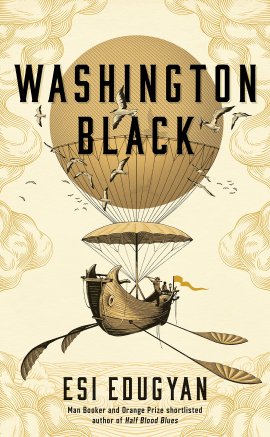
This was my fourth read from this year’s Man Booker shortlist and the most conventional I have read so far. The novel begins in Barbados in 1832 on a plantation owned by Erasmus Wilde, an Englishman who inherited the estate from an uncle on his mother’s side. He has been forced to manage the business as his father, a famous explorer who has spent most of his life away from home and family, shows no interest. As you might expect, Erasmus runs the plantation with cruelty and treats the slaves he has inherited (and now owns) as inhuman; they represent nothing more to him than units of work who must be managed and mistreated in order to keep them functioning. George Washington Black (‘Wash’) is a young boy at this time who has known nothing in his life apart from slavery. He lives on the plantation mainly in the care of Big Kit, a fellow slave who protects but also, at times, treats him cruelly, for what she sees as his own good, to harden him up for the life he will lead.

Washington Black imgWashington Black’s life is turned around, however, when Erasmus’s younger brother, Christopher, or ‘Titch’, arrives at the plantation. He is an inventor, a man of science like his father, who does not share his brother’s views on slavery. Titch has come to Barbados in order to work on a flying machine he has designed and asks his brother for a helper. Erasmus loans him Washington Black and the boy goes to live in Titch’s quarters, helping him with drawings and experiments as well as practical household tasks. Titch discovers that Washington has considerable artistic talent as well as abilities which will be useful in his science projects and he teaches him to read. This change in Wash’s circumstances means he can probably never go back to being with the other slaves and the question is posed whether Titch has served his protégé well.

A cousin of the Wilde brothers, Philip, arrives at Faith plantation to convey the news that the men’s father is missing presumed dead. Titch is devastated, but for Erasmus this represents yet more administrative burden as it means he must now run all the family’s business. Philip remains at Faith plantation for many weeks, staying in Titch’s quarters, so Wash gets to know him well. He is a malign presence; on one occasion, while out with Titch observing the preparations for the flying machine he shouts an instruction to Wash that causes him to stand too close to a device that explodes. Wash suffers disfiguring facial burns and it is as if Philip knew it would happen.

One day, Philip takes Wash, to help him on a shooting trip, during which the troubled Philip turns the gun on himself and commits suicide. It is immediately clear to 12 year old Wash that, as the only witness, he will be blamed and most likely executed. Wash returns to Faith to tell Titch, who is also quick to realise the implications. Titch decides they must leave immediately and he decides to launch the flying machine he has been working on. The night is a stormy one, however, and not ideal conditions for the launch of the ‘Cloud-cutter’, a bizarre contraption that seems to be a cross between a hot-air balloon and a rowing boat. Though it travels for a short distance, they have to finally crash land it on a boat in the ocean. Fortunately, the ship’s captain is sympathetic and allows the pair to sail with them to America.

Wash is now an escaped slave, and one instantly recognisable by his scarred face. Titch takes Wash with him on a search for his missing father (he does not believe that he died), but it becomes apparent that he wishes to separate from him. The two eventually find Titch’s father in the frozen north of Canada, and it is clear that the relationship between the two men is a difficult one that leaves Titch troubled. During a blizzard, Titch leaves their camp, and Wash finds himself alone and having to fend for himself, even more so when the old man eventually does die.

The rest of the novel is about how Wash makes his way in the world, evades capture by a slave-hunter and eventually finds himself in England, pursuing his passion for biology. Always, however, he is preoccupied by Titch’s abandonment of him and by the mystery of his own early life when he was transported from Africa. He finds some success and a settled life, but he becomes frustrated with the fact that his achievements will never be fully recognised, even in abolitionist England, because he is a black former slave.

This is an interesting and fascinating novel and I found the story deeply engaging. The characters are well-drawn and authentic and the issue of black slavery, the horrors of it and how it dehumanised all its victims, is vividly explored. The novel is broad in scope and beautifully written and I enjoyed it very much. Like most of the books I have read so far from the shortlist (The Long Take excepted) there is a drop in pace about half to two thirds of the way through, and I do think this is an editing issue. There are parts that could have been slimmed down in my view.

That issue aside, it remains a great story, and I recommend it.

How did you rate this Man Booker shortlisted book?

If you have enjoyed this post, I would love for you to follow my blog. Let’s also connect on social media.

Man Booker shortlist review #3 – “Everything Under” by Daisy Johnson

This was my third book from this year’s Man Booker shortlist and the one I have enjoyed the least so far. At just 277 pages it’s the shortest novel on the shortlist, but, I’m afraid to say, for me, the end could not come soon enough. At just 28, Daisy Johnson is apparently the youngest author ever to grace the shortlist, and her achievement is remarkable considering this is her debut novel (she has had a short story collection published previously). There is no doubting her talent: the concept of the book is ingenious (a modern re-telling of the Oedipus myth) and her prose is as fluid and alive as the river that dominates the book. However, for me, there was something in the execution that was missing.

Everything Under imgGretel is a 32 year old woman living alone in Oxford. She works as a lexicographer, a natural career for her as her life has been dominated by words – their invention, their use, and, perhaps also, their lack. She had an unconventional upbringing with an eccentric mother on a canal boat. In her early years, Gretel and her mother developed their own language, a succession of private words for things for which a single expressive term did not exist, for example “sheesh time” refers to a desire to spend time alone, and “Bonak” will come to mean something to be afraid of, something threatening.

Gretel has been estranged from her mother since she was 16 years old. It is remarkable that this young woman has managed to make any sort of life for herself at all, given the background which we come to learn about. But Gretel has always known that she would be reunited with her mother, either dead or alive. For years she has occasionally contacted morgues and hospitals to ask if any unclaimed, unidentified older women have been admitted. One day, a morgue assistant says that, in fact, yes, a middle-aged woman fitting Gretel’s description had been admitted. Gretel believes this is it, and she goes off fully expecting to find the body of her mother. She is disappointed to find that it is not, but it sets her off on a quest in search of her mother.

This is where it gets confusing, because each of the eight chapters is divided into sections headed “The Cottage”, “The Hunt” and “The River”. The novel jumps back and forth between different times – the ‘cottage’ sub-chapters refer to Gretel caring for her mother at her home (she found her). Sarah, the mother, either has dementia or a serious mental illness so the circumstances are challenging to say the least. The ‘hunt’ sections refer to Gretel’s search for her mother, and the ‘river’ sections look back on the past, to Gretel’s past, her childhood, and Sarah’s life before Gretel was born.

None of it proceeds in a linear fashion, which is fine, and normal for modern novels, but within the sub-stories (ie, cottage, river and hunt) there is jumping back and forth in time, so you need to be on your toes…which I was not, so I found it difficult to follow. Threaded through the ‘hunt’ and ‘river’ stories is the story of Margot/Marcus, a transgender child/adolescent who was the child of Roger and Laura, a couple Gretel meets in her search for her mother. Marcus was born Margot, and grew up as part of Roger and Laura’s family until one day he/she disappeared without explanation or further trace, a fact the couple have never come to terms with. There is a connection with Sarah that only becomes apparent much later.

I knew before I read the book that this novel is a re-telling of the Oedipus myth – in Greek mythology, Oedipus, you may know, inadvertently killed his own father and married his birth-mother, Jocasta, who then hanged herself when she discovered the truth. Even when you know the ending to the Oedipus story, it is difficult to see how Everything Under is going to end. It wasn’t until about three-quarters of the way through that I had the a-ha moment. In that sense it’s an extremely clever novel, brilliantly conceived, and I felt that perhaps I wasn’t paying enough attention, but, in a way, that’s the point: I wasn’t paying enough attention because the book rather lost me as a reader. I found the narrative voice confused and confusing, the handling of past and present was not done as well as it might have been, in my view, and this was frustrating. There have been some comments from the Man Booker judges this year about editing, and how some of the books on the longlist could have been much the better for being shorter. This is clearly not the case with a shortish novel like this one, but I did feel that it needed a jolly good edit, a reordering, and I’m afraid I did think there was quite a bit of chaff (I still don’t understand the significance of the dog that Gretel finds!)

If you are interested in the Man Booker and in literature generally, I think this is an interesting read, to see how the modern novel is evolving, and to see how an ancient story might be handled in a modern setting. (I think a lot of popular soaps handle some of the same themes pretty successfully!) I found this novel somewhat laboured in its adherence to the myth and it sometimes got itself in knots. For me.

What has been your favourite/least favourite of the books shortlisted for the Man Booker?

If you have enjoyed this post, I wouold love for you to follow my blog. Let’s also connect on social media.

Man Booker Review #2 – “The Long Take” by Robin Robertson

Time for my second Man Booker shortlist review and of the three I have read so far, my favourite. I wasn’t expecting to enjoy it as much as I did; the subject matter – a D-Day veteran suffering from PTSD – did not appeal particularly and when I saw the format – extended verse – I found my heart sinking slightly. That’s totally unfair, and I can in no way begin to justify that reaction other than to say I just love a good solid novel! I am delighted to say I was completely wrong, and I think it’s great when our prejudices and preferences are tested and we are pleasantly surprised.

The Long Take imgThe central character is Walker, a man from rural Nova Scotia, who fought with the Allied forces in the D-Day landings. He has seen and experienced terrible events, death and injury that most of us can barely even imagine, and he survived. After the end of the war, he goes back to the United States and finds himself living among the homeless in New York City. The book is divided into four sections: 1946, 1948, 1951 and 1953 each set in a different US city (though Los Angeles is the setting for both 1948 and 1953). As he reflects on his experiences, it becomes clear that it was impossible for him to return home to Canada. He reminisces about the quiet, gentle life he led there, where the rhythms of the seasons, the dependence on the harvests of the seas, and community events (such as village hall dances) dominate everyone’s existence. It’s as if the contrast between that life and the brutality he witnessed in the war means he fears contaminating the innocence of those he has left behind. He can never go back, never unsee what he has seen, and those he once loved will never be able to understand how he has been changed.

In New York City, Walker lives among the vulnerable and the dispossessed. He is already suffering the effects of his PTSD:

A dropped crate or a child’s shout, or car

                Backfiring, and he’s in France again’

                That taste in his mouth. Coins. Cordite. Blood.”

In 1948 Walker moves to Los Angeles and begins working on a city newspaper, initially writing film reviews, but then, as his profile grows and he earns respect among fellow journalists for his writing, he is given weightier projects. He persuades his Editor to let him do an extended investigation into homelessness. This takes him to San Francisco in 1951, and then back to LA in 1953. Walker is an observer, he seems to move on the periphery. He earns the trust of the cast of characters he befriends on the streets and his own personal trauma enables him to empathise with them:

                “People; just like him.

                Having given up the country for the city,

                Boredom for fear, the faces

                Gather here in these streets

                Like spectators in a dream.

                They wanted to be anonymous

                Not swallowed whole, not to disappear.”

The final part of the book is the most intensely drawn. Walker recalls the devastation of older parts of the city, the traditional buildings, to make way for modern concrete highways and car parks, fuelled by corruption in the city authorities and mafia money. In the process many of the itinerant population were made homeless from whatever meagre shelter they had created for themselves and effectively thrown onto the scrap heap. The account of the destruction of the soul of the city is juxtaposed with vivid and detailed descriptions of the war:

                “The side of a building fell like a tree.

                Then the rest of it just collapsed

                In on itself, immediately lost

                In a dense cloud of brick dust;

                The delay of the noise and shock waves.

                There was an army there, pulling down everything north of 1st.

                …

The sound of mortars like gravel on a metal slide; a running tear. Right next to me, young Benjamin took some shrapnel in the throat: his windpipe torn open, so he’s gargling blood and staring at me, fumbling at his neck like he feels his napkin is slipping.”

What is fascinating and moving about the work is how Walker’s wartime experiences have made him more human, more empathic, whereas those who live oblivious are consumed by inhumanity, lack of feeling for others and, in the case of the authorities, cruelty. America is failing those in need in the pursuit of economic growth, greed and modernism.

I thought I would find the verse structure annoying, but it is beautiful, as is the economy of Robertson’s language. It perfectly suits the slightly ethereal, enigmatic central character and his own relatively silent presence in the communities in which he moves and verse provides a way of creating the vivid imagery of his wartime recollections.

I recommend this book highly. Don’t be put off if you are not used to reading verse, you will get used to it quickly. An amazing piece of work.

What is your favourite book on the Man Booker 2018 shortlist so far?

If you have enjoyed this post, I would love for you to follow my blog. Let’s also connect on social media. 

Man Booker Review #1 – “Milkman” by Anna Burns

With just a few days to go now until the announcement of this year’s Man Booker Prize winner, my goal to read all six titles by the 16th is not going well! In fact, it’s my worst performance in several years; I have only just started on my third title. Milkman took me some time to read. It is quite long, but it is also written in a way that I found it nearly impossible to read at my usual pace. The lyrical prose style that means you have to read nearly every word in order to feel the full impact. The same is true of the second book I read, The Long Take by Robin Robertson, which is in fact an extended poem, although it is somewhat shorter. I’m now on Everything Under, also quite short, but I’m not really enjoying it so finding it quite hard going.

Milkman imgMilkman is set in Belfast during the Troubles in Northern Ireland and the central character and narrator is a young Catholic woman who finds herself drawn unwillingly into a relationship with a local paramilitary leader. It is not clear when the book is set, but I am guessing around the late 1970s, early ‘80s. Northern Ireland is known to be socially conservative, but the general sense of the place of women in society suggests to me that it dates back quite some time. Our central character (not named, I’ll come onto this) is from a large family. Her father is dead and she has several siblings, both older and younger. She is in a “maybe-relationship” with a local young man, who she has been seeing for about a year, though they have not made a commitment to one another. She is keen on running as a hobby and shares this with “third brother-in-law”. Whilst out running one day in a local park she finds that she is observed by a man in a white van. Over subsequent weeks he infiltrates her life by stealth, indicating that he expects her to have a relationship with him. He is known only as “Milkman”. It becomes clear to her that he is quite a powerful local figure in the paramilitary world, so not only does she have little choice about whether to become involved with him or not, it is made quite clear to her that as long as she goes along with him no harm will come to her “Maybe-boyfriend”.

The pace of the novel is slow as we follow her complex internal dialogue about what she should do, her fears, her accounts of how the community reacts to her activities and descriptions of what life is like in this environment of threat, surveillance, oppression and violence. At first I found this slow pace frustrating, especially as there were parts early on that I felt could have been edited down. However, by the end of the book I could see that the author was building her character’s world quite carefully. Some readers will no doubt be only too aware of what life was like at this time in Belfast, the segregation, the violence, the suspicion, but most of us will not, and the slow pace ultimately helped to draw me in and help me appreciate the character’s dilemma. The sense of how she had no choice, the sense of how any behaviour outside the accepted norms is considered beyond the pale. For example, our character has a habit of “Walking while reading”, which almost everyone around her considers unacceptable behaviour and comments upon and encourages her to stop doing. It is ironic that such innocuous behaviour is thought to be dangerous and provocative in a context where shooting, killing and blackmail are not.

None of the characters in the book are named, all are referred to by their relationship to the central character (eg Ma, wee sisters, first sister), or some other title. This is not as complicated as it sounds and I think the author is trying to make her characters representative of the lived experiences of so many ordinary people in Northern Ireland at that time. It is also indicative of the dehumanising effect of the Troubles, and in particular what our young woman went through. By removing any autonomy or choice from her (and it was not just Milkman doing this, it was the strictures of the community) there is a gradual destruction of her selfhood.

So, a long and complex read, but a brilliant novel from a very talented writer. The prose is sublime, the language is like nothing I’ve read before, except perhaps Lisa McInerney. It won’t appeal to those who like action and plot, but for an examination of the day to day life of a young person in Northern Ireland during that terrible period it is something quite special, and very enlightening. Recommended.

Have you managed to read any of the Man Booker shortlisted titles yet?

If you have enjoyed this post, I would love for you to follow my blog. Let’s also connect on social media.

Book review: “The Last Runaway” by Tracy Chevalier

This was one of my holidays reads and one of two books my book club chose for our summer break. It’s only my third Tracy Chevalier novel, but each time I read her I just want more! I read Girl with a Pearl Earring years ago when it was first published and then The Lady and the Unicorn a year or so ago, which I thought was wonderful. I have since picked up Virgin Blue from my local secondhand bookshop so that will be next on my list.

The Last Runaway imgOne thing that is so impressive about Chevalier is how beautifully she creates the  historical setting: the two novels I have read so far have been set in 17th century Holland and 15th century Paris and Brussels and I can only begin to imagine the amount of research she has to undertake. The Last Runaway is set in the United States in the mid-nineteenth century when parts of the country were only just being settled. Honor Bright, our main character is a young Quaker woman from Dorset in England. She has led a modest and sheltered life, but her world was turned upside down when her fiancé left her and their close-knit Quaker community for another woman. This was not only a scandal but it left Honor distraught and in a very difficult position. When her sister, Grace, is persuaded by her fiancé that they should move to America, Honor decides she must go with her, not only to support her sister, but to escape the oppression of her situation and have some chance of making a life for herself.

Their journey from Bristol to New York is arduous and Honor suffers with debilitating seasickness. As they travel the long distance from New York to Ohio, Grace contracts Yellow Fever and dies. This places Honor in a further difficult position: not only must she tell Adam Cox, Grace’s fiancé, that she is dead, but she is also in fear about where that leaves her as he, of course, has no obligation to support her. Honor, however, cannot face going back to England either because of the journey or the shame.

On the final leg of her journey, Honor has a frightening encounter with a local slave-hunter, Donovan. Honor is appalled both by his profession and his dangerous air, and yet also finds herself strangely drawn to him when he seems to flirt with her. This also sends her into a tailspin as it conflicts with her Quaker outlook and moral code.

Honor arrives in the small town of Wellington, close to Faithwell, her intended destination. There, she finds quarters with Belle Mills, the local milliner, who, it transpires, is also the half-sister of the mysterious Donovan. Belle warns Honor about him and it is clear there is a tension between these siblings. During her stay with Belle, Honor adapts her talent for quilting (quilting, its traditions, the patterns and its place in Quaker culture, are a strong and fascinating motif running through the novel) and shows promise as a hat-maker, endearing her to Belle and her many customers. Belle’s designs are often flamboyant, which is an anathema to Honor, who, as a Quaker, must observe plainness and modesty in all forms of dress. The two women develop a firm friendship, however, and Honor begins to feel more confident.

Honor first realises there is something strange going on when she finds a black man under a woodpile in the yard of Belle’s home. Honor is aware of the existence of the slave trade, indeed, the Quakers were an important part of the movement calling for its abolition, but this is the first time she has come so close to an escapee. She is terrified, particularly when Donovan comes searching at his sister’s property, sensing the presence of the runaway. Honor later learns that Belle is part of a network of citizens who provided the means of escape, food and shelter for runaway slaves fleeing the South to states which had already outlawed slavery – the ‘underground railroad’. Belle was what was known as a ‘station-master’.

Honor is collected from Belle’s by Adam Cox, Grace’s fiancé, and taken back to Faithwell, to live with him and his sister-in-law (also widowed) and to work in their shop. The domestic situation is uncomfortable for Honor, however, and her prospects only  brighten when she is wooed and then married to fellow Quaker Jack Haymaker. At first it seems like a good marriage that will improve Honor’s situation, but her mother-in-law proves to be a formidable presence, who does not conceal her contempt for her daughter-in-law and how little she has to offer when Honor goes to live with them on their isolated farm. At first, Jack is attentive and loving, but quickly becomes complacent and Honor grows increasingly miserable, despite her efforts to feel and appropriate degree of godly gratitude. Tensions deepen when Honor decides she will provide support for runaway slaves passing through their property. This is against the expressed wishes of the Haymakers. A law has been passed which makes it illegal for anyone to help a runaway, and the penalties are severe. Whilst the Quakers are against slavery, they are also against law-breaking and Honor’s actions are seen as a threat to their livelihood. Honor finds herself increasingly in conflict with the family until the point where her position becomes untenable. All the while, Donovan hovers in the background, stalking Honor and sniffing out runaways.

I will say no more as the events of the story then take quite dramatic turns. I loved the unexpected twists of the plot. I also love the way the author wove in details about the slave trade and the underground railroad (which I confess I knew very little about). Colson Whitehead’s 2016 novel The Underground Railroad brought the existence of this movement to the attention of many readers for the first time, I think. I was not aware that Tracy Chevalier had also written this novel about it. I also loved the domesticity of this novel, its femaleness and the feminine craft of homemaking, particularly in relation to the skills required for good quilting. This seems to be a common theme in Chevalier’s work. I loved how strong the women were in this novel; the men do not come out looking so good!

I recommend this book highly. It’s a great story, a fascinating read and will give you an insight into worlds you may not know much about.

If you have read this book, I would love to hear your views.

If you have enjoyed this post, do follow my blog and let’s connect on social media.

Book review: “American Pastoral” by Philip Roth

2018-08-08-16-30-02.jpg

The theme for July in my Facebook Reading Challenge was an American novel. It was a tough choice as I wanted to select something that captured the American ‘story’. I at first thought about The Color Purple, which had been on my shortlist for February (a work by a feminist writer) but I felt it was too similar to June’s choice of I Know Why The Caged Bird Sings, the first volume of Maya Angelou’s autobiography. I also thought about The Bonfire of the Vanities, but decided it was a bit long and my fellow readers on the Challenge would not thank me! So, I finally alighted on Philip Roth’s American Pastoral, which seemed appropriate in terms of both subject matter and timing, since Roth died just a couple of months ago. I’m not sure how other readers on the challenge got on, but I’m afraid I failed to complete it within the month – it’s not overly long at 423 pages, but the writing is so rich that it was almost impossible to read at any pace. I had to (and wanted to!) savour every word. That gives you an idea of my overall feeling about the book – it is tremendous, epic, glorious and tragic. If you want to understand anything about the American experience, especially the immigrant experience over the last hundred years or so and the effect that has had on the mindset of American-born second and third generation immigrants, it is essential reading.

2018-07-23 16.19.23The plot is not complicated: ‘Swede’ Levov is a third generation Jewish immigrant whose grandfather came to America from Europe. He was a glovemaker and set up a business in Newark, New Jersey which became highly successful. Swede’s father continued the business, which peaked in the 1950s and 1960s when glove-wearing for respectable women was the norm and most would have several pairs. (There is more information on gloves in this book than you will ever need to know, but it’s fascinating!) Swede inherited the business from his father, while his more wayward brother became a cardiac surgeon.

Swede Levov pursued the quintessential ‘American dream’ – he excelled in sports at school, served in the military, followed his father into the business, and learned the glove trade, married an Irish-American Catholic former beauty queen, with whom he had a daughter, Merry. From the outside everything seems perfect except for one small flaw – Merry has a stammer, which no amount of expensive medical or therapeutic treatment seems to be able to fix. This is the first indication that Merry perhaps represents some flaw which will undermine the Levovs and all that they represent.

Slight spoiler alert (though not really because you learn of the event quite early in the book): as a teenager Merry becomes obsessed with opposition to the Vietnam war. She becomes increasingly frustrated and rebellious. Her parents lose control and it culminates in her planting a bomb in the general store of Old Rimrock, the solid New Jersey semi-rural idyll in which the family has settled. The bomb kills the local doctor.

Swede’s world begins to fall apart; he cannot accept that his daughter has committed this crime, believing that she must have been put up to it by others, or indeed that others did it and are allowing her to take the blame. For a number of years Swede lives in the hope that he will be able to find his daughter, that the truth will come out and that she will be exonerated, and that their life will return to ‘normal’. For a time, it appears that he might find be able to find Merry, when a woman known as Rita Cohen contacts him saying she knows Merry’s whereabouts. Swede becomes convinced that she is in fact the real bomber because she is cruel and threatening and extorts money from him.

The Rita Cohen thread is all part of Swede’s self-deception, however, and this is the central theme of the book – Swede, his wife and his family, represent the ‘American dream’, which is in fact, just that, a fantasy, a mirage. Merry’s actions put Swede on a path where everything he held dear, which he believed to be real, unravels and is exposed as a sham.

As I have already said, the plot is not complex because it is not a novel so much about events as it is a deep exploration of the American psyche. The structure of the book is quite complex, however, but so brilliantly done that it is not hard to follow. It flits effortlessly between different stages, between different characters and their individual stories and the handling can only be described as masterful. No wonder it won the Pulitzer Prize (1998)! It explores notions of religion in America, particularly the Jewish experience as told through the Levov family, and through the eyes of our first narrator, former schoolmate of Swede’s and now author Nathan ‘Skip’ Zuckerman, the Catholic experience (through Dawn Levov) and the American Protestant experience through the residents of Old Rimrock. The decline of the glove industry and its craft, and also the city of Newark where the Levov family business was based, is a metaphor for the gradual collapse of the concept of the American dream which now seems to lie degraded and in ruins. A further metaphor is the Garden of Eden story, itself Old Testament fiction. The book is written in three parts (Paradise Remembered, The Fall and Paradise Lost) echoing Milton’s epic poem Paradise Lost, because for Swede Levov the experience is truly a destruction of all that he once understood to be real and to be good.

Philip roth
In American Pastoral Roth explodes the idea of the ‘American dream’.

This is the longest review I’ve written in a while and yet I feel I have only scratched the surface in telling you about this book. I have only just completed it so I may write more in a few weeks once it has had a chance to sit with me! Truly, as I savoured the last few pages I was open-mouthed at the unravelling. It is truly an American tragedy (the title is a kind of oxymoron), and it reminded me of Long Day’s Journey Into Night, Who’s Afraid of Virgina Woolf similar examples of the collapse of an American dream happening in slow motion before our very eyes. The final dinner party scene is quite spectacular.

Needless to say I recommend this book highly. It’s not an easy read but it rewards in spades.

If you have read this book I would love to hear your thoughts.

Book review: “I Know Why The Caged Bird Sings” by Maya Angelou

When Maya Angelou died in 2014 at the age of 86, she was one of the towering figures of American culture and politics. Poet, author, civil rights activist, speaker, friend and advisor to figures of national and international importance, her career was, by any standards, glittering. And yet, her start was a decidedly inauspicious one. In the late 1960s she was persuaded to begin writing an autobiography and she went on to publish it in seven volumes, the latest one appearing in 2013, just a year before her death. I Know Why The Caged Bird Sings is the first volume and covers her childhood and coming of age. Her early life in Arkansas featured parental abandonment, overt racism, sexual abuse, discrimination and poverty. It is a sobering tale, and a testament to her immense ability, that someone with that kind of background could become such a great and important figure, well-known not just in the United States, but throughout the world.

I Know Why The Caged Bird Sings imgI chose this book for my 2018 Facebook Reading Challenge. The June theme was an autobiography, a tricky category since enjoyment can often depend on your feelings about the author. I also wanted to avoid titles that would most likely have been ghost-written. After thinking about it for some time, I chose this, the first volume in Angelou’s memoir series, and the one which is often considered to be the best. It can be read as a stand-alone.

I had read it myself many years ago; I have written on here before that at some point in my teens, I resolved to work my way along my local library bookshelves starting at ‘A’! I read the first five volumes (the fifth was published in 1986 when I would have been 18, so I imagine I did not read them all consecutively). I remember I enjoyed the book at the time, and parts of it were familiar, coming back to it so many years later, not least the horrific scene where she is raped by her mother’s lover. This aspect of Maya’s story, like all the other terrible instances of injustice she experienced, is told without self-pity (apart, perhaps from the toothache!) or sentimentality, and this, I think, is the mark of her greatness as a writer.

I loved also, the evocation of the setting – 1930s Arkansas is set out vividly before us, particularly the evangelical Christianity of the black community, the tense relations with their white neighbours on the other side of town, and the poverty of the community, scraping a meagre living in the most challenging of circumstances, from cotton-picking, domestic service or, in the case of Maya’s grandmother “Momma”, from running a small business.

I also loved the language – the Deep South comes across so profoundly in the words and phrases used by the author, such as the wonderful term “powhitetrash” to refer to the prejudiced white townspeople of Stamps who blight the lives of the black community with their bullying, their cruelty and their vulgar behaviour. And I loved the characters, from the young Maya, to her elder brother Bailey, whom she adored, to Momma, the starched Christian woman of steadfast values and brilliant business acumen. The author brings them alive so skilfully that they walk the pages of this book.

I Know Why The Caged Bird Sings is a must-read. I trust that it is on academic reading lists throughout the United States, but it should also form part of the historical context for any student of American history. It is not an easy read and the nature of the language definitely slows the pace (it took me twice as long to read as any other book of this size), but you would do well to read it slowly as the pace draws you into the languid lifestyle of the setting. Someone on the Facebook group listened to the audiobook, narrated by Angelou, herself, which sounds like a must-listen. Coincidentally, the book was also abridged for Radio 4’s book of the week recently, and that should still be available online. It was very good.

Highly recommended, should probably even be on everyone’s books bucket list.

If you have read Maya Angelou’s memoirs what impact did they have on you?

If you have enjoyed this post I would love for you to follow my blog and for us to connect on social media.