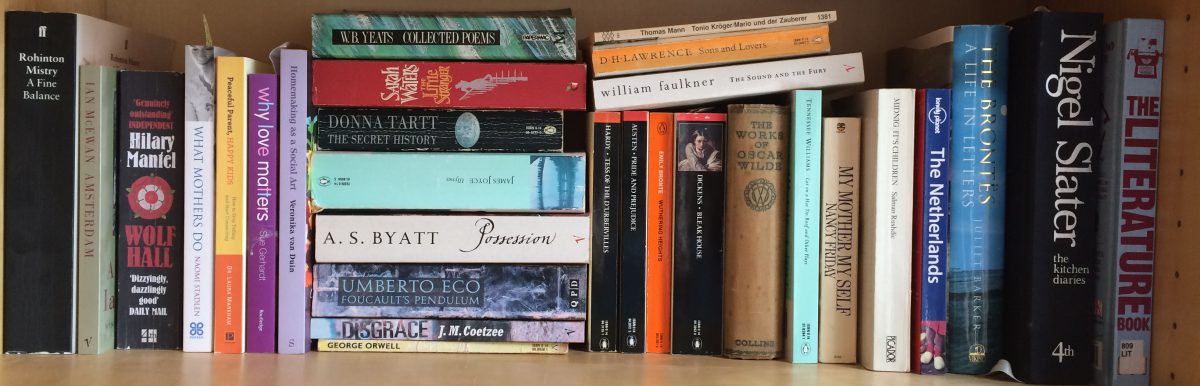
The big excitement in the literary world recently was, of course, the announcement of this year’s Booker Prize shortlist. In past years I have set myself the task of trying to read the whole shortlist before the award is made, but I have never yet managed it. I think I read five out of the six one year, but last year I think I only managed two or three and abandoned the intention somewhere around Christmas-time. The Booker Prize seems like less of a landmark than it once was, though; one of the criticisms is that it is now dominated by US-published books, since it was opened up to writers in English from outside the Commonwealth in 2014. One of the fears was that it would “homogenise” literary fiction, although it is curious that this year’s prize nominees constitute one of the most diverse I can remember with it having a majority of women and a majority of people of colour. I would like to read all of the novels on this year’s shortlist, they all sound fascinating, but if there is one thing the past twelve months have taught me it is that I should not be too goal-orientated. My world feels like it has been on shifting sands and most of my plans have had to be abandoned, with the consequence that I have often felt like I was failing at every turn. At this point in time I am just trying to be kind to myself, recognise that things change and give myself a pat on the back for things done rather than admonishing myself for things still to do. And keen readers will know that that TBR pile NEVER shrinks!

The big shock of the Booker Prize shortlist was that Hilary Mantel’s The Mirror and the Light, the third and final part of her Wolf Hall trilogy, was not even nominated. This followed hard on the heels of not winning the Women’s Prize a week earlier (that award went to Hamnet by Maggie O’Farrell – my next read!). Hilary Mantel has spoken of these twin ‘failures’ as being something of a relief – there had been so much talk of whether she could ‘do the treble’ (Wolf Hall and Bring Up the Bodies having won in 2009 and 2012, respectively), but remember this is literature not football! I don’t think Hilary will be suffering too much of a crisis of confidence! As an artist, I hope her feeling of achievement is from the work itself. And what a work it is!
Talking of goals, I wrote on here back in March, when we all first went into ‘lockdown’ (I really, really hate that word), that one of the things I was planning to do with all my spare time was to both read The Mirror and the Light and re-read Ulysses (so much endless time), but of course I did not. Both books are enormous. It took a concerted effort during August to finish The Mirror and the Light. One of the reasons it took me so long was because it is so brilliantly written I wanted to savour absolutely every word. Also, with such a huge cast of characters, it was not always easy to follow who was conspiring with whom.
We all know the ending – Cromwell falls out of favour with Henry, following a fairly concerted campaign by his enemies at court, and is eventually executed. Knowing this, rather like re-reading a good book, helps you to track how events are unfolding. This is a really outstanding book, a fine achievement, and one which rewards the hard work, the investment the reader has to put into it. It is much longer than the first two parts of the trilogy, and at times, especially at the beginning, I felt it could have been edited down a bit, but, now I’ve finished it, I’m not so sure. There is no doubt that, as a reader, you get your money’s worth – less than £1 per hour of reading is pretty good value! And the craft, the authorship, the writing skill, and the research, not to mention the years of her life Ms Mantel has put into this book, make it, in my view, a true literary landmark. It seems above prizes.
Hilary Mantel has also given us all a lesson in politics and a lesson in history. It was an interesting time to be reading the book. The name Dominic Cummings (most famous breaker of lockdown rules) will be familiar to most people in the UK. Not just in the UK but in other countries too, there is a culture war going on between an establishment ‘elite’ and ‘upstarts’ perceived not to belong. I do think this is an element in some of the hostility that is expressed towards people perceived to be outsiders. I should add quickly that I do not think this is undeserved (I’m thinking Cummings, but also Trump), but there is undoubtedly self-interest in the hostility coming from some quarters and some people seem to be piggy-backing on legitimate criticisms. Waiting for their moment to strike, perhaps.

Holbein the Younger
Thomas Cromwell (according to Mantel) was a schemer, self-interested and a manipulator, but he was also (and I should add that my comparison with the contemporary examples of outsiders mentioned above ends right there!) a brilliant tactician and a man of extraordinary talents with an unmatched intellect. His chief ‘crime’ in the eyes of his enemies at court, though, was being low-born, he son of a blacksmith; he dared to ascend to the very highest roles at court, the chief confidante of the king, but he paid the price, ultimately, for that daring. His enemies eventually succeeding in getting rid of him.
I recommend The Mirror and the Light very very highly.

 I had been thinking about some of the classic love stories – Jane Eyre, Anna Karenina, Gone with the Wind, The Remains of the Day – but none of these felt much like ‘holiday reading’. But then a bit of online research threw up the perfect suggestion – Call Me By Your Name by Andre Aciman. First published in 2007, this novel was made into a very successful film in 2018 starring Timothee Chalemet and Armie Hammer. It is set in the 1980s on the Italian Riviera (perfect!) and concerns a romance between Italian-American Elio (Chalemet), spending the long hot summer at his parents’ holiday home, and visiting academic Oliver (Hammer). It is apparently quite steamy (perfect!). I have not yet seen the film, so I am delighted to read the book first.
 At the start of this novel Nurit is divorced, ghost-writing money-spinner books for celebrities and somewhat directionless. Her affair with Rinaldi is long over, but he contacts her and asks her to write some columns on Chazarreta’s murder. He arranges for her to stay at the home of his newspaper’s proprietor at La Maravillosa so that she can get close to the scene of the crime and the people who live there. It was Rinaldi who called Nurit ‘Betty Boo’, because of her dark eyes and dark curly hair. As Nurit gradually becomes immersed in the crime, her relationship develops with two other journalists at El Tribuno, which her ex-lover edits: Jaime Brena, the disillusioned middle-aged hack, former crime journalist, now reduced to the lifestyle section of the paper, and ‘Crime Boy’ the young upstart, now the lead crime writer on the paper, who, with his limited experience, turns increasingly to Brena for help on the Chazarreta case.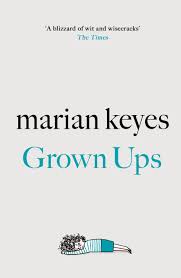
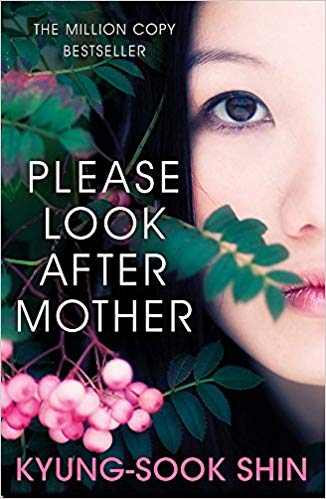 The premise of the story is very simple: So-nyo is a wife and mother to five children, all of whom are now grown-up and living their lives in different parts of the country (South Korea). So-nyo lives a very simple fairly rural life with her husband at the family home, where there are many privations. The place is almost a throwback to a bygone era. So-nyo’s eldest son, Hyong-chol, lives in Seoul with his wife and family and it is while his parents are on their way to visit him (to celebrate the father’s birthday) that his mother goes missing; she was holding her husband’s hand on the busy underground station platform one moment, then she seemed to slip from his grasp and just disappeared into the crowd.
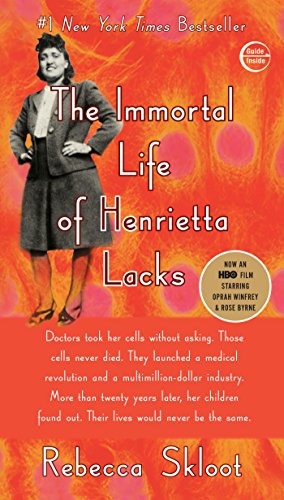 By the strangest of coincidences, I have also just read two books which also explore issues of race and class. Rebecca Skloot’s non-fiction work The Immortal Life of Henrietta Lacks, and The Water Dancer by Ta-Nehisi Coates. Skloot’s book is a detailed and complex account of one woman, Henrietta Lacks, an African-American woman from Virginia who died in 1951 from aggressive cervical cancer. The cancer cells from her body were special and unique because they were the first ever cells that were able to not only survive outside their host, but were able to continue to thrive and reproduce, at a rapid rate. This perhaps accounts for the very aggressive nature of Henrietta’s disease. Scientists used these cells, known universally as HeLa cells, to create trillions and trillions more of them, which have been used ever since, worldwide and have been directly responsible for the development of life-saving drugs and treatments, for example for polio. The key to the story, however, is that Henrietta died without ever having been advised about or consenting to the use of her cells in this way, neither did her family, and none of her surviving relatives have been given any financial compensation. What makes the story all the more shocking, however, is that Henrietta died at a time of segregation, and almost certainly did not receive the same level of care and respect as a white woman would have done. I will write more about this book in a future post because it is a fascinating story.
 The other book I have been reading, The Water Dancer, concerns the story of Hiram, a black slave also in Virginia in the mid-1800s. His mother was also a slave, but his father was a slave-owner, who allowed his son some elementary education after his mother’s death and then, when he was in his teens, gave him the special status of being the personal servant to his white half-brother, Maynard, the heir to their father’s estate. Hiram is also the grandchild of legendary slave Santi-Bess, one of the original transported Africans who is said to have had magical powers (Conduction), although it does not become entirely clear what these are until towards the end of the book. The first significant glimpse of this is when, whilst chaperoning Maynard on a drunken night out, the two young men somehow end up in the river. Maynard drowns but Hiram somehow emerges alive. The events which follow Maynard’s death eventually afford Hiram the opportunity to escape slavery via the Underground and he soon becomes an agent of that cause. It is not a straightforward choice for him, though, as he is forced to confront traumatic memories of his mother, who died when he was very young, and to face the many complex facets of slavery, its consequences, its victims and what it means to be free.
 The Silence of the Girls has been critically-acclaimed and was shortlisted for last year’s Women’s Prize for Fiction. I really, really wanted to love this book, but I’m afraid I didn’t. It could be that the timing was wrong – December for me was mad busy so I read the book in short bursts over a longish period when I was quite stressed. I don’t think I gave it the time and attention it deserved. But then, neither did it really grab me when perhaps it ought to have done.
 This book grabbed me by the throat right from the outset; I listened to it on audio (fantastic performances from the actors Julia Whelan and Kirby Haborne, by the way) and simply could not ‘put it down’. I got a lot of exercise in January, because going for a walk became an excuse to listen to a few more minutes’ worth!
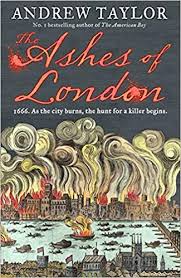 A book I listened to at the end of last year was Ashes of London by Andrew Taylor. I borrowed it from the library when it was first published in 2017 but did not manage to get through it before I had to return it for someone else. It is a historical thriller set at the time of the Great Fire of London in September 1666 and is the first in Taylor’s Marwood & Lovett detective series. I have not yet read (or listened to) the second and third books in the series, both of which were published last year, but they sound intriguing.
 What I liked about it, however, was less this grander aspect, but rather the quality of its story-telling. I must admit that 50 or so pages in, I was not overwhelmed! There are twelve characters in the book, all women bar one (who is trans), all black or mixed race. They are broken down into four groups of three, and each threesome is strongly connected in some way (eg mother/daughter). Each group is also connected with the others, even if only in a tenuous way (eg teacher and former pupil) and almost all are in some way connected to Amma, the first character we meet. Amma has written a play which is having its debut performance at the National and this provides the framework of the novel. Many of the characters are present at the penultimate chapter of the book, the after-party, where the differences between them and their lives are laid bare. This is interesting because the author is not only trying to draw out the similarities between the characters and their life experiences, suggested by their common characteristic of being mixed race and female, but she is also, I think, railing against the notion of such women/people being homogeneous; they are all far more than just their race or gender.
