New rules for life?

I dip into self-help books from time to time and have a reviewed a few on here, from Marie Kondo’s The Life Changing Magic of Tidying, which aims to improve our relationship with the things in our home, to Big Magic: Creative Living beyond Fear by Elizabeth Gilbert, which helped me to change my mindset about my right to be creative and to think of myself in that way. Both very powerful. Over the last few weeks I have been listening to Matt Haig’s Notes on a Nervous Planet (audiobooks seems to take me much longer to get through), which I have found immensely enjoyable. I’d even go so far as to say it was inspirational. I also picked up Jordan Peterson’s much-hyped 12 Rules for Life: An antidote to chaos although I’m afraid I found it quite turgid and didn’t get very far before I had to take it back to the library for the next person on the reserve list.

So, I originally planned for this post to be a compare and contrast between the two, but it’s going to focus more on the Haig, which, from what I read, was better anyway. Matt Haig has suffered with depression and anxiety for much of his life and it sounds as if this has at times been debilitating. Mental illness is a huge topic of conversation at the moment, rightly so, and it is very much a spectrum from occasionally feeling down or going through periods of stress and anxiety, to full-blown depression that afflicts people for years, to suicide. Matt Haig does not use this book directly to examine or discuss his own battles with depression, it’s not a memoir, but he does refer to it throughout as a way of illustrating his points.

Matt Haig’s book is more about how modern life is placing almost unbearable pressures on human beings today. He is particularly concerned about young people, and the impact of social media on their mental health. Social media forces us all into unrealistic comparisons where we will inevitably fall short. And the fact that we are constantly connected, constantly reachable and how it is so difficult to ‘switch off’ (both literally and figuratively) makes so many of us vulnerable. It is ironic that at a time when we have more ‘friends’ and followers than ever before, we seem to be more lonely than ever. This topic has been in the news again this week as new research undertaken by the BBC is revealing the extent of loneliness felt amongst young people in particular.

Notes On A Nervous Planet is, in my view, required reading, especially for young people. There are lots of people on my Christmas list who will be getting copies. I listened to it on audiobook and found Matt’s lovely, warm voice, made it particularly compelling. I will  now buy the book, however, it’s one I’d definitely like to read again.

By contrast, the little bit I read of Jordan Peterson’s left me rather cold. I think with self-help books, there are just the ones you like and the ones you don’t, and I’m afraid 12 Rules for Life probably falls into the latter category. His rules include “Treat yourself like someone you are responsible for helping”, “Assume that the person you are listening to might know something that you don’t” and “Do not bother children when they are skateboarding”. I’m sure there is some real wisdom in some of these more cryptic headlines, but there are a lot of words to plough through before you get to it and, sadly, it did not resonate with me. I fell asleep several evenings, just reading the (very long) Foreword! I’ll give it another go, when my turn comes around for the reservation, but I’ll not be rushing out to buy it. As a general rule, I don’t do very well with ‘Rules’ and prescriptions, particularly for something as chaotic as life.

If you have read either of these books, I’d be interested to know what you think.

If you have enjoyed this post, I would love for you to follow my blog, and let’s connect on social media. 
 

Kids book review: “The 1,000 Year Old Boy” by Ross Welford

Regular readers of this blog will know that I am a huge fan of children’s literature and regularly post about kids’ books I have read. I would encourage all adult readers to dip into children’s literature from time to time. For many of us the love of reading was fostered in childhood, and it can be a lovely experience to rediscover that innocent joy. For some, that might mean going back to old favourites (for me it was Enid Blyton, Lewis Carroll and Puffin Books, and it was wonderful to re-read these with my children when they were younger) but I would also urge you to explore current authors and titles. If you have school-age children or grandchildren it can be a great way of understanding what their priorities are, their hopes and fears, and the challenges they face, which may be rather different to our own.

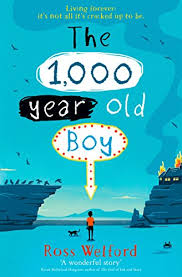
As you may know, I set up a Facebook Reading Challenge at the start of the year, with a different theme for each month. September was a children’s book and I chose Ross Welford’s The 1,000 Year Old Boy. This was Welford’s third book, published earlier this year. I loved his first novel Time Travelling with a Hamster which I read with a book group I used to run at my youngest daughter’s primary school. The children all loved it too.

The 1000 year old boy imgThis book, like Welford’s others, is set in North Tyneside (where I used to live, so it resonates with me for that reason too), on the coast east of Newcastle. Alfie Monk is over 1,000 years old, having been born at the time of the Danish invasions of Britain. When he was young, his father was custodian of some ‘life pearls’ within which were stored an elixir of eternal life. To access the elixir the life pearls had to be smashed and the liquid consumed. Alfie’s father was involved in a fight with someone who tried to steal the life pearls, and he was killed. Alfie (unfortunately?) smashed two of them accidentally; he and his mother (and their cat!) drank the liquid, meaning they will never age and therefore never die of natural causes. The curse can only be lifted by drinking another dose of liquid, but there is only one life pearl left. This is hidden on a remote island off the Northumberland coast.

Alfie and his mother live a quiet and discreet life in a secluded cottage in the woods. By moving around every few years they have managed to avoid discovery and the authorities. Alfie’s existence is awkward though; if he makes a friend they soon become suspicious of the fact that he does not grow up like them, and it is the betrayal of one former friend in particular which leads to a fire at the cottage which destroys Alfie’s home and kills his mother. Alfie finds himself in the care of the local authority and is unable to reveal anything about himself, fearing the consequences. Fortunately, Alfie makes two good friends, Aiden and Roxy, both of whom live on the estate close to Alfie’s cottage. He reveals his secret to them and they set out to help him.

Roxy is a feisty young girl, and a wonderful character. Shrewd, able, quick-witted and intelligent, she has a resourcefulness which no doubt comes from her being the sole carer for her disabled mother. Aiden is less sure of himself and is a thoughtful young boy, whose family moved onto the estate after running into financial difficulties. His parents argue a lot and his friendship with Roxy and Alfie helps him get away from his problems at home. All three main child characters are strongly developed, well-rounded and believable. The narration switches between Aiden and Alfie and I loved the way the author uses their different speaking styles to convey character.

I love the way Welford writes; he has a real ear for the language that young people use and there are great comic touches in this book which will appeal to kids’ sense of humour. There are some challenging themes here – I read Matt Haig’s How to Stop Time earlier this year, where the main protagonist has a condition which means he ages extremely slowly. Rather than being some miracle to be aspired to, Tom Hazard, like Alfie Monk in Welford’s book, finds it lonely and isolating because it prohibits normal human relationships. Alfie says throughout that he just wants to be a normal boy, to go to school. At one point he talks heartbreakingly about the “Prison of my deathless life.

This novel has everything you want from a children’s book – pace, plot, great characters who grow and learn from their experiences, and suspense. It has a happy ending. Although I believe that children should not be completely shielded from some of the tragic realities of life (Alfie’s mother is killed and for a time he believes his cat was also), I also think it’s important for the 9-12 age group that there is positive resolution and that good things can come out of bad. That way, I believe, we can help build children’s resilience, a role that books have always had in my life for sure.

Highly recommended for 9-12 year olds.

If you have read this book, I would love to hear your thoughts. 

If you have enjoyed this post, do subscribe to my blog and let’s connect on social media.

Fantastic television this Autumn

I posted earlier in the week about how much I love this time of the year and how I find it a very energising and creative time, but also a time of great beauty in the natural world. Well, it’s all looking pretty good indoors too, as television seems to take a step-up in quality at this time of the year. Frustrating really when you should be out and about making the most of these rapidly shortening days and precious sunshine, but surely one of the great inventions of modern life is ‘catch-up’!

There are so many shows on television to enjoy – I love watching the Great British Bake Off with my daughters, and it inspires a flurry of cake-making in our house. I’m coming round to watching it on Channel 4, though it’s not the same with ads, and without Mary, Mel and Sue. We also love Strictly, even if it does make me feel like it’s the countdown to Christmas.

It’s in the genre of television drama, however, that the schedules are very rich. I was glued to Bodyguard on the BBC, where the momentum in the media built up so much that catch-up was impossible – you had to be there. I wasn’t sure about the first episode, but then I was hooked and found the dramatic tension compelling. I really wanted it to be the Security Services, but perhaps that reflects my cynicism about UK politics at the moment.

I was also very excited about ITV’s new adaptation of Vanity Fair, but sadly, after two episodes, and the third still to watch, I’m not greatly moved. It’s great to look at and has the most amazing cast (Martin Clunes is a highlight), but I’m finding it very superficial and simplistic, and the Becky Sharp in the series is not the one I remember from the book, although it’s years since I read it.

I’m also looking forward to catching up with Killing Eve. I loved lead actor Jodie Comer in Doctor Foster and it looks as if she has really come into her own with this show. And Black Earth Rising is a must-see for me. I have been fascinated by the history of the Congo for years and have read a number of books on the subject. I only hope it is safe enough to go there one day. I was delighted to see this new drama and can’t wait to delve in. The Cry also starts this weekend.

All this at a time when I’m trying to work my way through the 2018 Man Booker shortlist (two books a week, yikes!), and as for radio, well, I can’t miss The Archers at the moment, wondering what is going to happen to Freddie and Lily!

How do you rate the television offerings this Autumn?

What are you doing when you’re not reading?

If you have enjoyed this post, I would love for you to follow my blog and let’s connect on social media.


Man Booker Prize 2018 – shortlist announced next week

Next Thursday (20 September) sees the announcement of the shortlist for the 2018 Man Booker Prize, the foremost literary prize in the UK and one of the most important on the international calendar too. The longlist was announced back in July and I have to confess that I was not familiar with any of the novels listed. The shortlist comprises the six best novels, as agreed by the judging panel from their longlist of thirteen books.

MB judges 2018
The Man Booker 2018 judging panel (L-R) – Val McDermid, Leanne Shapton, Kwame Anthony Appiah (Chair), Leo Robson, Jacqueline Rose

This is an important year for the Booker as it celebrates its 50th anniversary. There was a special award made earlier this year for the Golden Man Booker, the best work of fiction from all the winners. The judging panel was a stellar cast and each chose their favourite work, as follows:

Robert McCrum – In a Free State (1971) by VS Naipaul

Lemn Sissay – Moon Tiger (1987) by Penelope Lively

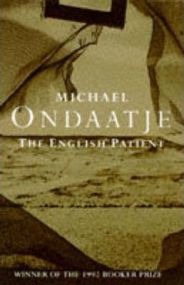
Kamila Shamsie – The English Patient (1992) by Michael Ondaatje

Simon Mayo – Wolf Hall (2009) by Hilary Mantel

Holly McNish – Lincoln in the Bardo (2017) by George Saunders

The English patientThis shortlist was announced in May and the list was then put up for a public vote. My personal favourite of these was Wolf Hall. In 1983, the celebrate the 25th anniversary of the prize a “Booker of Bookers” contest was set up and three judges chose Salman Rushdie’s Midnight’s Children, which I probably agree with. It was good to see the vote open to the public this time rather than a small group of the literati, and the winner was The English Patient. I still remember reading that book for the first time the year it came out and then the wonderful movie with Ralph Fiennes and Juliette Binoche, which itself went on to win several Oscars including Best Picture.

The panel of judges this year includes Val McDermid, so you can be sure that one of their criteria will be whether or not it’s a great story, something, I think it’s fair to say, literary fiction does not always consider of the highest importance. That was my feeling about last year’s winner, sadly.

For the last couple of years I have set myself the task of reading the shortlist before the winner is announced in October. Last year I managed five out of the six, and I STILL have not completed Paul Auster’s 4321 – I want to, honestly, but it’s SO LONG! I will do the same again this year, although I note that we seem to have one less week than usual between the shortlist and the announcement of the winner on 16 October – yikes, less than four weeks! Let’s hope there are no more monster tomes!

So look out for the shortlist announcement this Thursday; it will probably make many of the news bulletins.

Do you plan to read the Man Booker shortlist?

If you have enjoyed this post, do follow my blog and connect with me on social media.

Book review: “Death on the Nile” by Agatha Christie

This is my second Agatha Christie this year. Having never in the past felt a particular desire to read her work, I have to say that I am completely won over! I chose this book for August in my Facebook reading challenge, which happened also to coincide with my summer holiday. When I stop and think, there is something a little odd about choosing books about death and misery for the kind of escapist material I usually seek for holiday reading, but there is a kind of unreality about the two books I have read, a kind of nostalgia for a bygone era. I do also love the sense of place that Christie evokes; I found this to be true also of Murder on the Orient Express, which I read in January, although in this novel, there are some anachronistic references to the Egyptians which make a modern reader wince slightly.

Death on the Nile imgIn some ways, there is not a great deal to say about Death on the Nile that you couldn’t say about any other Christie novel, I suspect: there is a situation, in this case, a Nile cruise, being undertaken by 10-15 characters, all for different reasons. Conflicts and tensions are set up amongst the different characters, mysterious aspects of their personality or behaviour are noted, one of their number dies and then there is a process of detection to work out whodunnit. I did largely guess the correct outcome in the case of this novel, although I didn’t with Orient Express.

Both the Christie novels I have read are Poirot novels (these make up a third of Christie’s impressive oeuvre) and he is, of course, a marvellous central character – quirky, consistent, charming, and with a brilliant mind. David Suchet played Poirot to great acclaim in the wonderful UK television series, and although I am familiar with them I have to confess I never actually watched them! Suchet was in my mind, however, as I was reading the book.

I found the book unputdownable. I was eager for each new chapter, each new revelation; you can argue until the cows come home about whether this is “great literature” or something more “popular” but you can’t ask for much more than that, in my view. Wonderful characterisation, brilliant plotting, vivid imagination and storytelling that keeps you gripped to the end.

2018-09-10 10.16.18
Quite a back catalogue!

Reading these two books this year has definitely made me want to read more Christie. I find the novels quite quick reads, just as well since there are nearly 70 of them! I feel the need now to start with the first Poirot novels, to see how his character begins and how the author develops it over time. I also fancy like to binge-watching all those Poirot television dramas – there must be a channel somewhere showing them! A project for when the nights start drawing in, perhaps.


Christie is such a clever writer and one who clearly understood her readership and gave them what they wanted. Yes, I suppose they are rather formulaic, but when the world feels rather unpredictable there is no harm in getting what you expect from a book!

Recommended.

What appeals to you about Agatha Christie?

If you have enjoyed this post, I would love for you to follow my blog and to connect with me on social media.

Au revoir Brittany! Back to blogging!

Although it’s been a wonderful summer, it feels, as always, good to get back to my desk, to my computer and to my blog. I’ve had nearly 3 weeks ‘off’ – I use that term more because it is a general expression, not because I see it as any kind of chore. In truth, I have missed my blog! The reason I have posted so rarely is because I was a) doing so much reading, b) got totally sidetracked by a nearly impossible jigsaw puzzle at our holiday home (!), and c) was just having a great time with the family. When I wasn’t reading we were cooking, eating, talking, staring at the stars, a sight we are not so used to in our light-polluted Greater Manchester suburb, getting out and about, all the things you do on holiday, really. It’s been a fantastic break for all of us and we have all come back newly energised to face into the new academic year (it’s another big one for our family), ready to meet new challenges and set new goals.

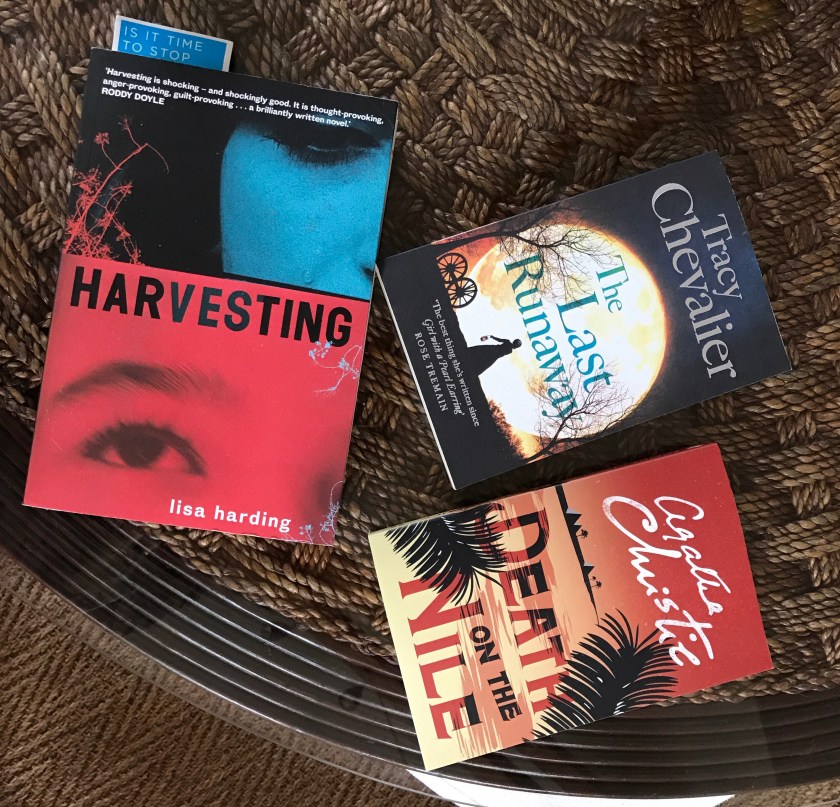
974db1fd-e67b-4366-9e06-9cac492fef1b-1125-00000161832e76ce_fileI managed to read all three of the books I took on holiday with me, and enjoyed all of them immensely. They were Harvesting by Lisa Harding, Death on the Nile by Agatha Christie, the August choice for my Facebook Reading Challenge, and The Last Runaway by Tracy Chevalier. I’ll be posting reviews of them over the next few weeks.

So before I launch into the ‘new year’ (I’ve posted here before that I find September a more effective time to start things than January), I would like to close off the summer with some pictures of beautiful Brittany. We stayed in Cancale, well-known for its oysters, something I eat maybe once every couple of years – twice in a fortnight is enough!

I loved Mont-St Michel, over the border in Normandy. It was absolutely thronged, but we arrived early afternoon and by 5pm the crowds had thinned significantly.

We visited beautiful Dinan, ‘town of history and art’, a couple of times and I loved it. One tip if you go there – don’t expect to be able to get lunch after 2pm!

Another favourite was Ile-de-Brehat, a wonderful island, just off the coast near Paimpoul. It’s tiny, rugged, and there are no cars. You can hike from one end to the other, or as we chose to do, cycle all the way round.

Finally, from my holiday photo album, recognise this?

2018-08-28 16.39.09

I was delighted to be able to visit St Malo, setting of Anthony Doerr’s wonderful novel All the Light You Cannot Seea truly beautiful town.

Have you ever visited Brittany or been to any of these wonderful places?

If you have enjoyed this post, please follow my blog. I mostly post book reviews, with a few other things scattered in between!

Summer holidays

We arrived in France yesterday for our family summer holiday. We had a week in Ireland last week visiting family, travelling between Dublin and West Cork. It was wonderfully full-on so there was precious little reading time. However, now that it’s just the five of us I’m looking forward to a slower pace. My children are all well into the teen zone now so my husband and I find ourselves twiddling our thumbs in the mornings, waiting for them to get up. Perfect reading time!

We are staying in Cancale, a smallish coastal town in Northern Brittany, arriving here on the overnight ferry from Cork to Roscoff, which was very pleasant indeed – good, reasonably-priced food, decent cabins and plenty to do.

I’ve been unusually restrained with my holiday library this year, just the three books: Harvesting by Lisa Harding, a harrowing account of child prostitution, child trafficking, abuse and neglect, Death on the Nile, by Agatha Christie, the August choice for my Facebook Reading Challenge, and The Last Runaway by Tracy Chevalier, one of my book club’s summer reading titles.

I’ve almost finished Harvesting in the first couple of days! It’s not for the faint-hearted, but is gripping. I’m told it has been thoroughly researched and is not an outlandish account. If this is the case, I have truly led a sheltered life. It’s tough stuff.

If I manage all three books there is always the Kindle back-up! I’ll keep you posted on my progress.

What are your holiday reading choices?

Book review: “American Pastoral” by Philip Roth

2018-08-08-16-30-02.jpg

The theme for July in my Facebook Reading Challenge was an American novel. It was a tough choice as I wanted to select something that captured the American ‘story’. I at first thought about The Color Purple, which had been on my shortlist for February (a work by a feminist writer) but I felt it was too similar to June’s choice of I Know Why The Caged Bird Sings, the first volume of Maya Angelou’s autobiography. I also thought about The Bonfire of the Vanities, but decided it was a bit long and my fellow readers on the Challenge would not thank me! So, I finally alighted on Philip Roth’s American Pastoral, which seemed appropriate in terms of both subject matter and timing, since Roth died just a couple of months ago. I’m not sure how other readers on the challenge got on, but I’m afraid I failed to complete it within the month – it’s not overly long at 423 pages, but the writing is so rich that it was almost impossible to read at any pace. I had to (and wanted to!) savour every word. That gives you an idea of my overall feeling about the book – it is tremendous, epic, glorious and tragic. If you want to understand anything about the American experience, especially the immigrant experience over the last hundred years or so and the effect that has had on the mindset of American-born second and third generation immigrants, it is essential reading.

2018-07-23 16.19.23The plot is not complicated: ‘Swede’ Levov is a third generation Jewish immigrant whose grandfather came to America from Europe. He was a glovemaker and set up a business in Newark, New Jersey which became highly successful. Swede’s father continued the business, which peaked in the 1950s and 1960s when glove-wearing for respectable women was the norm and most would have several pairs. (There is more information on gloves in this book than you will ever need to know, but it’s fascinating!) Swede inherited the business from his father, while his more wayward brother became a cardiac surgeon.
Swede Levov pursued the quintessential ‘American dream’ – he excelled in sports at school, served in the military, followed his father into the business, and learned the glove trade, married an Irish-American Catholic former beauty queen, with whom he had a daughter, Merry. From the outside everything seems perfect except for one small flaw – Merry has a stammer, which no amount of expensive medical or therapeutic treatment seems to be able to fix. This is the first indication that Merry perhaps represents some flaw which will undermine the Levovs and all that they represent.

Slight spoiler alert (though not really because you learn of the event quite early in the book): as a teenager Merry becomes obsessed with opposition to the Vietnam war. She becomes increasingly frustrated and rebellious. Her parents lose control and it culminates in her planting a bomb in the general store of Old Rimrock, the solid New Jersey semi-rural idyll in which the family has settled. The bomb kills the local doctor.

Swede’s world begins to fall apart; he cannot accept that his daughter has committed this crime, believing that she must have been put up to it by others, or indeed that others did it and are allowing her to take the blame. For a number of years Swede lives in the hope that he will be able to find his daughter, that the truth will come out and that she will be exonerated, and that their life will return to ‘normal’. For a time, it appears that he might find be able to find Merry, when a woman known as Rita Cohen contacts him saying she knows Merry’s whereabouts. Swede becomes convinced that she is in fact the real bomber because she is cruel and threatening and extorts money from him.

The Rita Cohen thread is all part of Swede’s self-deception, however, and this is the central theme of the book – Swede, his wife and his family, represent the ‘American dream’, which is in fact, just that, a fantasy, a mirage. Merry’s actions put Swede on a path where everything he held dear, which he believed to be real, unravels and is exposed as a sham.

As I have already said, the plot is not complex because it is not a novel so much about events as it is a deep exploration of the American psyche. The structure of the book is quite complex, however, but so brilliantly done that it is not hard to follow. It flits effortlessly between different stages, between different characters and their individual stories and the handling can only be described as masterful. No wonder it won the Pulitzer Prize (1998)! It explores notions of religion in America, particularly the Jewish experience as told through the Levov family, and through the eyes of our first narrator, former schoolmate of Swede’s and now author Nathan ‘Skip’ Zuckerman, the Catholic experience (through Dawn Levov) and the American Protestant experience through the residents of Old Rimrock. The decline of the glove industry and its craft, and also the city of Newark where the Levov family business was based, is a metaphor for the gradual collapse of the concept of the American dream which now seems to lie degraded and in ruins. A further metaphor is the Garden of Eden story, itself Old Testament fiction. The book is written in three parts (Paradise Remembered, The Fall and Paradise Lost) echoing Milton’s epic poem Paradise Lost, because for Swede Levov the experience is truly a destruction of all that he once understood to be real and to be good.

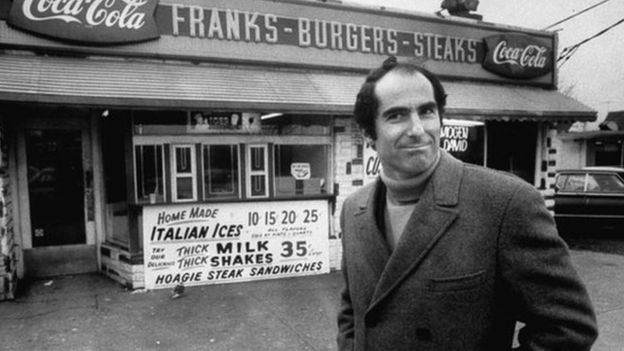
Philip roth
In American Pastoral Roth explodes the idea of the ‘American dream’.

This is the longest review I’ve written in a while and yet I feel I have only scratched the surface in telling you about this book. I have only just completed it so I may write more in a few weeks once it has had a chance to sit with me! Truly, as I savoured the last few pages I was open-mouthed at the unravelling. It is truly an American tragedy (the title is a kind of oxymoron), and it reminded me of Long Day’s Journey Into Night, Who’s Afraid of Virgina Woolf similar examples of the collapse of an American dream happening in slow motion before our very eyes. The final dinner party scene is quite spectacular.

Needless to say I recommend this book highly. It’s not an easy read but it rewards in spades.

If you have read this book I would love to hear your thoughts.

Kid’s book review: “The Explorer” by Katherine Rundell

I want to tell you about a wonderful book I have just completed which will be perfect summer reading for 9-12 year olds; long enough to last them for a holiday, but with enough pace to sustain their interest and sufficient can’t-put-it-down qualities! Katherine Rundell. This is only her fourth novel, but she has already won two major prizes: the Waterstones Children’s Book Prize in 2014 for Rooftoppers and The Explorer won the Costa Book Award in 2017. Phew!

The Explorer imgThe novel begins with a dramatic event: four children are travelling in a light aircraft across the Amazon jungle, which then crashes. The pilot dies (this is quite gently done, it is not frightening), which means the four children, five year-old Max, his older sister Lila, both Brazilian, and Con and Fred, two Brits, aged about 11-12, find themselves alone. Each of the children has their own back-story and their characters are carefully-drawn: Fred is resourceful, a natural leader who the others look to, but he is also a troubled soul, his mother is dead and he longs for the approval of his remote and uptight father. I should add at this point that the story is set, I would guess, in the 1950s. Con is a feisty and assertive girl, who is also often angry and finding herself in conflict or impatient with the others. She comes across as something of a spoiled brat, but she too is hiding a deeper insecurity. Her secret will be revealed much later. Lila and Max are siblings. Max is very young, vulnerable and afraid. Lila is fiercely protective of him, acts as a mother-figure in the absence of their own family, and has the maturity to bring the group together at times of great stress.

Straight away the children’s survival instinct kicks in and they search for food, are vaguely aware of the dangers of certain plants and creatures, build a shelter and work out how to start a fire. Very soon they find a pouch with a rudimentary map, which they hope will take them back to some sort of civilisation. With nothing to lose they decide to build a raft to take them along the river. They are forced into it in any case when their fire, which they had failed to fully extinguish, catches hold and burns the whole area they were staying in. They have to take to the river to escape.

Once on board their raft they encounter many other hazards, but they are also having the adventure of their lives, far away from the dull and staid lives they normally lead. Even though they know they are facing grave dangers at every turn, they also feel that this experience is life-affirming:

“The next day was a Wednesday. Wednesday at school began with double geography: the most exciting thing that happened on Wednesday was biology with old Mr Martin, who was liable to fart at unexpected intervals.  This Wednesday, Fred woke to a rainforest thunderstorm, and rain dripping through the roof of the den into his ear.”

About halfway through the book the children encounter a man in the rainforest, ‘the explorer’, who lives in a ruined ancient city with his pet vulture. He is initially hostile to them, which comes as a shock to the children as they clearly believe that he, as the adult, will help them in their dire need. He falls woefully short, however, and they find that they must continue their survival efforts. He allows them to stay with him in the ruined city, and, as he gets to know them better, trust develops and he transfers some of his knowledge of the rainforest to help them. Over time, he slowly reveals to them why he has chosen to live alone, rejecting the rest of human society and why it is so important to him that the ruined city remains a secret. He too has a tragic back-story that helps to explain his behaviour.

Spoiler alert: Max becomes very ill and it becomes apparent that without medical help he will die. The explorer reveals to them that he has a small plane, but that Fred will have to learn to fly it to get the children out of the rainforest and to their only chance of safety. They make it to Manaus, landing in a field, and Max gets the treatment he needs in time.

This is a really cracking story with a good balance of peril and positivity. It is both an adventure story and a very touching exploration of humanity. It will appeal to those interested in environmental issues as it is a love story to the rainforest and all that is special about it, as well as an exhortation to tread lightly on the earth. Insensitive human exploration and endeavour has a great deal to answer for and has put places like the Amazon rainforest in jeopardy. The explorer voices a desperate plea on behalf of the planet when he appeals to the children to ‘pay attention’:

“’Do you see all this?’ The explorer held his torch high, casting light on the trees and the sleeping birds. ‘You don’t have to be in a jungle to be an explorer,’ he said. ‘Every human on this earth is an explorer. Exploring is nothing more than the paying of attention, writ large. Attention. That’s what the world asks of you. If you pay ferocious attention to the world, you will be as safe as it is possible to be.’”

Another theme running through Rundell’s work is the resilience and resourcefulness of the young and the error that adults make in trying to ‘protect’ them too closely. Children need to learn to take risks and find their own boundaries and discover meaning in their lives. The four children here learn much more than school will ever teach them as a result of their experience and manage perfectly well without adults.

I loved this book and found myself moved and uplifted by it. Highly recommended for 9-12 year olds. It is augmented with some beautiful illustrations, which younger ones will enjoy.

Have you read any of Katherine Rundell’s books?

If you have enjoyed this post, please subscribe to my blog and follow me on social media.

Hot new reads for the Summer

As Britain swelters under a seemingly relentless heatwave, thoughts are turning to holidays, even though perhaps that fortnight in the sun could just as easily be had at home at the moment! So, if you are looking for ideas for your holiday reading list here are some new titles that you might look out for. It’s quite an international list so if you are outside the UK you should be able to find most of these too.

The Burning Chambers by Kate Mosse – I haven’t read any Kate Mosse but having just finished The Birth of Venus I am in the mood for historical fiction! Set in 16th century Carcassonne, France, it concerns an elderly bookseller and his family and the impact of the religious wars on their lives.

The Baghdad Clock by Shahad Al Rawi – already a best-seller in Dubai and the UAE, this novel, set in the time of the first Gulf war in 1991, looks at how the conflict affected the ordinary people of the city of Baghdad. When our television screens are full of images of refugees caught up in war, of bodies and of bombed-out buildings, I hope this novel will give us an insight into the reality of the lives of people just like us.

Lala  by Jacek Dehnel – an elderly woman recounts her extraordinary life to her grandson. Born in Poland in 1875 she lived through two world wars, life under communism and then liberation. This book has already won prizes in the author’s native Poland.

Social Creature by Tara Isabella Burton – set in New York city this novel concerns the increasingly oppressive friendship between two young women, aspiring writer Louise and wealthy social butterfly Lavinia. The two women meet when Louise goes to tutor Lavinia’s younger sister. Their friendship becomes necessary to both of them, but for different reasons, and is characterised by deceit, jealousy and an unhealthy dependency.

The Hour of Separation by Katharine McMahon – McMahon’s The Rose of Sebastapol is one of my all-time favourite books. I haven’t read anything she has written since, but I really like the sound of this novel. Another novel about friendship between two women, Christa and Estelle, this time set in 1939, who have in common Fleur – Fleur was the Belgian Resistance fighter who saved Christa’s father in the Great War. She was also Estelle’s mother. The two women meet just before the outbreak of World War Two.

My Year of Rest and Relaxation by Ottessa Moshfegh – I loved Moshfegh’s thriller Eileen, which was shortlisted for the Man Booker Prize in 2016. Her new novel, published in the UK this week, promises to be equally dark and thrilling. Set in 2000, around the corner in time from 9/11, our narrator is a wealthy young New Yorker. The deaths of her parents while she was studying at Columbia university, a sense of the pointlessness of her own life, and dysfunctional relationships with her so-called best friend and her Wall Street boyfriend, lead her to take a ‘narcotic hibernation’. It is not without consequence.

The Temptation of Gracie by Santa Montefiore – the cover tells you this is going to be perfect for poolside! Gracie Burton blows all her savings on a week-long cookery course in Tuscany, much to the consternation of her daughter Carina and granddaughter Anastasia. The trip turns out to be about more than just mid-life crisis, however, and aspects of Gracie’s past that her family were not aware of, are revealed. Tantalising!

Some of these books are only just out and so may only be available in Hardback, or e-reader – perfect for holiday packing!

What are your recommendations for the summer?

If you have enjoyed this post, do subscribe to my blog to get notifications of future posts. Let’s also connect on social media.