Easter Greetings

easter-3248883_1280

Easter is falling rather early this year, and with the weather not looking great for the UK this weekend, it could be a rather chilly Spring break. Perfect for spending time with a book! My kids will be getting the usual smallish chocolate egg from the Easter mummy bunny, plus a book token, a tradition I started a couple of years ago.

I’ll be away for a few days and have been giving some thought to what reading material I will take with me. I will, as always, take far more than I will actually get through, but I do that because I get a bit nervous when I have only one book available to read! I like to have a choice and nearly always have a couple of books on the go, in any case.

I’ll be taking Paul Auster’s 4321, about which I posted here a couple of weeks ago. I started it last Autumn and have found it really hard-going. I have been pondering whether to give up on it, but I think I’m going to give it one last focussed go, to see how I get on.

I’ll also be taking Frankenstein, the 1818 classic by Mary Shelley, which celebrates its bicentenary this year. I’m reading that with my girlfriends from my book club and we have booked to see the new production that is currently running at the Royal Exchange Theatre in Manchester in a couple of weeks. Really excited about that.

That’s it. Just the two books! That demonstrates an unusual realism about my reading and my commitment to doing justice to 4321, I think. (Although I do have a couple of back up books on my e-reader. Just in case.)

I bought a couple of magazines for the journey (I can’t read a book in a car) and nearly choked when I discovered they were £4.30. Each! Is it really that long since I bought a magazine? You can buy half a book for that!

Have a wonderful Easter, with plenty of reading and chocolate!

What will you be up to this Easter? What are you reading?

If you have enjoyed this post, do follow my blog, I’d love to hear from you.

Book Review: “The Life and Loves of a He-Devil” by Graham Norton

I love my little book club – it’s small and very exclusive and, besides books, we specialise in popcorn, gin and tonic and extra-curricular trips. All in the name of literature, of course!

We have been meeting every month for a couple of years now and have read a wide range of books: fiction, non-fiction, YA, thrillers, classics, to name but a few of our chosen genres. Some books we have loved, some we have loved less. Some generate an enormous amount of discussion, others less.

The Life and Loves of a He Devil imgWe decided for our March meeting we’d read Graham Norton’s 2014 memoir The Life and Loves of a He Devil. We wanted to read an autobiography and felt that among the many “celebrity” memoirs out there, Graham’s might have more to offer than most. We all like him as a broadcaster and personality and thought it might be fun. We were not wrong! But when we came to meet and discuss it, we had very little to say. We’d exchanged a number of messages on our WhatsApp group in the preceding weeks, with many laughter emojis, asking each other if we’d come across the dog and condom anecdote yet, or the Dolly Parton story. Some sections of this book, which I read most of whilst on a train journey to London, were laugh-out-loud, or rather “try to suppress a laugh because I’m in public”, moments. It’s a romp and Graham writes the way he speaks, with wit, authenticity and complete honesty. His writing style is similar in his novel Holding, which I reviewed here last year, and really enjoyed. (His second novel, entitled A Keeper, is due out in the Autumn.)

It’s charming and funny, and there is such a lot of name-dropping that it’s a bit of escapism too. Reading it is a reminder of just how successful, Graham is; I lost count of the number of homes he owns and the list of people he calls friends is something to behold. I think it’s because he manages to make you feel that he is a regular guy, just like the rest of us, and just as in awe of all the celebs and their glitter. He also manages to convey a kind of naivety and innocence that make you feel he is very ordinary. He is not of course; he’s supremely talented and clearly unusually astute to have achieved what he has. That does not come from luck alone. Concealing all of that beneath a veneer of self-deprecation is a talent in itself and I admire him enormously.

Back to my book club, we had only one criticism, and that is that the opening chapter (the book is divided into chapters, each of which is about one of his ‘loves’), about the joys of being a dog-owner, was, we felt, by far the funniest, so everything that followed was not inferior exactly, but did not quite meet the same high bar.

Not much to say then, except that it’s hugely funny, and if you like Graham Norton, you’ll love this book!

Have you read this or any of Graham Norton’s other books?

If you have enjoyed this post, I would love for you to follow my blog. Let’s also connect on social media.

Waiting for Spring…

…feels a bit like Waiting for Godot this year!

Tomorrow it’s the Vernal Equinox, the mid-point on the calendar between the Winter and Summer Solstices, when the number of hours of day and night are equal. It may be the official start of spring in meteorological terms, but, here in the UK, it still feels very much like winter! The daffodils in my garden are putting a brave face on it, but we have just had a weekend of snow-related disruption in many parts of the country and the strong winds blowing in from the east mean it is freezing out.

2018-03-19 14.58.03
Spring bulbs are flowering in the sunshine, but it’s freezing out!

It is at this time of year that many of us start to get itchy feet, desperate to get outside after the long winter, and yet the weather is making that quite challenging. I’m keen to blow the winter cobwebs away, but not to get blown away! We have been relatively lucky here in Manchester, in the north west of England, with very little snow settling, particularly compared to other parts of the country. Temperatures look set to improve by the middle of the week.

The downsides of this protracted winter are obvious: less fresh air, less getting out and about, less exercise and more hours with the heating on! I’ve written here before about my reluctance to make New Year’s resolutions, but at this time of year, I start to get some energy and motivation back. So I’m trying this year to see more of the positive in events, to default to ‘Yes’ and to see a glass half full. In that spirit, I’m trying to think about the upsides of this unexpected weather and one definite bonus is more time for reading: I can still justify curling up with a blanket and a book when it’s too cold to go out!

I’ve almost finished Madame Bovary, the March title in my 2018 Reading Challenge, and am looking forward to starting our children’s book for April, which I’ll be announcing next week. After blogging here about my difficulties with 4321 last week, I’ve resolved to give it another go and take it on holiday over Easter. I’m also looking forward to reading my next book from the children’s library, Red Nemesis by Steve Cole, a Young Bond adventure set during the Cold War. Very topical!

What are you reading at the moment?

If you have enjoyed this post, I would love for you to follow my blog by clicking on the subscribe button. Let’s also connect on social media. 


YA Book Review: “36 Questions that changed my mind about you” by Vicki Grant

This book took me straight back to being a teenager, not so much because I empathised with the central characters, but because reading it felt like a complete guilty pleasure. And I loved it!

36 questions that changed my mind about you imgThe central character, Hildy, is a slightly quirky, slightly awkward 17 year-old. She has two close friends – her best friend is Max, who is gay and fairly camp with it, and her other good friend, Xiu is much more astute, confident and successful in affairs of the heart. She confides in them extensively about her feelings and worries. Hildy has not had a boyfriend for some time and so, out of a degree of desperation signs up for a research programme which is exploring whether it is possible to facilitate a romantic relationship between two people by making them ask and answer a specific set of (36) questions. Hildy’s ‘partner’ in the programme is Paul, who, from the outset, makes it quite clear that he is only in it for the $40 fee and who is a nonchalant and frustrating participant to begin with; where Hildy makes an effort to answer the questions truthfully and fully, Paul is uninterested and uncooperative, and obfuscates throughout. Their first session ends with Hildy throwing a tropical fish at Paul that she had bought for her younger brother on the way to the meeting.

Hildy’s violent reaction to Paul’s behaviour is clearly sobering to him and he contacts her afterwards to apologise. They continue their interaction and to work through the questions via social media messaging and eventually agree to meet. Hildy’s home life is complicated, however; her parents are going through a difficult time in their marriage (she doesn’t realise why at first, although this is revealed towards the end). Her mother is a hospital emergency doctor and her father the Principal of her school. She has an older brother, with whom her relationship is somewhat distant, and a 12 year-old younger brother, towards whom she is very protective, especially as she feels he is suffering most from the troubles at home.

Slight spoiler alert….if you don’t want to know any more about the plot don’t read the next two paragraphs, though I won’t give away the full ending.

Paul also has his fair share of troubles; as their relationship develops, he confides in Hildy that his mother (who was a single parent) died in a car accident when he was young, and that he carries some guilt for this.

A crisis at home means that Hildy fails to make the coffee shop meeting with Paul they had arranged after carefully rebuilding the rapport between them after the fish incident. Since one of Paul’s most hated things is lateness, this causes another major setback. Hildy had no way of contacting Paul because he does not carry a mobile phone. She then has to set about tracking him down, knowing very few actual facts about him.

The usual question of whether the boy gets the girl/girl gets the boy, hangs over the rest of the book right to the final page.

The book has an interesting style, which I think will appeal to the target audience (13-15 year olds), with some chapters written in prose style, while those sections which make up the interactions between Paul and Hildy are written like dialogue in a drama. This writing style variation seems to be quite common now in YA books, I guess because it makes them a bit easier to read for an age group traditionally seen as having more limited attention spans. It does indeed make it an easy quick-fire read.

It is a romance, but it does deal with some of the issues teens face – peer pressure, how to deal with worries at home, social anxiety, awkwardness interacting with others in whom you are romantically interested.

I thoroughly enjoyed reading this book and recommend if your teenager would like something light and unchallenging to read. Will probably appeal more to girls.

How do you feel about your teens reading light romantic novels? Is it okay or do you wish they read weightier material?

If you have enjoyed this post, please follow my blog and connect with me on social media.

Advice wanted on Paul Auster’s “4321” please!

Around the middle of September, the six-book shortlist for the Man Booker Prize, the foremost literary award in the UK, and one of the top prizes globally, is published. I usually clear the reading decks for the next five or so weeks and set myself the goal of trying to read all of them before the winner is announced in mid-October.

Last year, I did pretty well, managing almost five before making my (incorrect!) prediction. Amongst many book bloggers, and reading groups, things become a bit competitive, and some years the books are long and it can become a real slog. In 2016, I struggled to get through Madeleine Thien’s Do Not Say We Have Nothing, which I found very sludgy at first, but thoroughly enjoyed by the end. I finally published my review of it this time last year, about six months after the Man Booker shortlist was published.

Alas, I have beaten that particular record… six months on and I have still failed to complete Paul Auster’s 4321. And this is making me a bit gloomy. It’s not that I’m not enjoying it, I sort of am, but to say it could do with some robust editing is an understatement. I crawled through the first 200 pages (which, incidentally, in a normal book with a normal typeface and normal line spacing would, I am convinced, be at least 300 pages), but I still have 650 pages to go! And it’s been so long since I read any of it that I’ll probably have to go back and start again.

It’s really heavy to carry around – definitely not one that slips in your handbag – and the audiobook is 37 hours long, which would still take me weeks to get through!

So, what to do? The reviews I have read say it’s great, which makes me want to continue, but it also feels like a huge commitment.

If you have managed to finish this book, do you recommend I continue?

My top ten literary film adaptations

serving the Oscars is a bit of a guilty pleasure for me. Don’t get me wrong, I’m aware of the froth and fakeness of it all – the ostentatious outfits, the overly emotional speeches, the elitism, the hangers-on – but there is something about the pictures and the footage which just sucks me in. I’m not a film buff, but I do love a film and am always interested in any with a literary connection. This year’s Oscars were a much-discussed affair; I have only seen one of the big contenders (Phantom Thread), but I feel I know all the others having heard so much about them. Oddly, the winner of the Best Film, The Shape of Water, is the only one that I probably won’t be rushing out to see.

Look in the Best Adapted Screenplay category for literary connections; in 2016 we had The Danish Girl, The Revenant, Room, Brooklyn and Carol among the big winners. That was a high point, as this year none of the big winners had a literary connection. James Ivory (so well-known for A Room With A View, Howard’s End  and The Remains of the Day adaptations) won the Best Adapted Screenplay award for Call Me By Your Name, based on a novel of the same name by Andre Aciman. This year, it felt to me as if the Academy Awards were more about the politics than the art.

So, the Oscars make me hunger for a good film based on a book. Here are my top ten favourites, in no particular order. They are not my favourite books (Ten! I couldn’t possibly choose just ten!) they are film adaptations that have stuck in my mind as most memorable and enjoyable – and no doubt in the days after posting this I’ll think of another half dozen that I should have included!

  1. The Wizard of Oz (1939) – based on a novel by L. Frank Baum.
  2. To Kill A Mockingbird (1962) – a favourite book and a favourite film, based on the Pulitzer prize winning novel by Harper Lee. Gregory Peck is just stunning.
  3. Macbeth (2015) – my favourite Shakespeare play, this is a brilliant film that conveys the passion, the grime and the extreme violence in a way that makes the Bard completely relevant to a contemporary audience and very accessible.
  4. Brooklyn (2016) – this was one of the first ‘grown-up’ films I took my two daughters to see (they are now 13 and 11). They have Irish heritage and we visited family in New York City the same year, so it felt highly relevant and they were able to empathise with the story quite deeply. Saoirse Ronan is stunning and it’s just a sheer pleasure to watch.
  5. Great Expectations (1946) – I am a huge Dickens fan and watch most of the film and television adaptations. I usually love them all, but this film is a classic. Directed by David Lean and starring John Mills and Alec Guinness.
  6. Apocalypse Now (1979) – based on the Heart of Darkness, the novel by Joseph Conrad, but relocated to the Vietnam War. The film was directed by Francis Ford Coppola and stars Marlon Brando, Robert Duvall and Martin Sheen. Incredible book, incredible film in its own right. The 1991 documentary about the making of the film is also a must-watch, as it was beset by disasters both natural and man-made.
  7. No Country for Old Men (2007) – based on the novel of the same name by Cormac McCarthy this is a brilliant film by the Coen brothers, though parts of it I watched from behind a cushion!
  8. Wuthering Heights (1939) – possibly my favourite book ever (if I had to choose only one) it is hard to leave this wonderful film starring Laurence Olivier off a best anything.
  9. Gone With The Wind (1939) – haven’t read the book, but I love this film.
  10. Sense and Sensibility (1995) – I couldn’t not have a Jane Austen in my list and this is my favourite. It also stars some of my favourite British actors – Emma Thompson, Kate Winslet, the late great Alan Rickman and Hugh Grant.

Having re-read this list, I’ve just realised what an incredible year 1939 was – extraordinary when you think of everything else that was going on.


What are your favourite film adaptations of books?

If you have enjoyed this post, do subscribe to the blog and let’s hook up on social media. 


Book review: “Oranges Are Not the Only Fruit” by Jeanette Winterson

Oranges are not the only fruitThis was February’s choice for my Facebook Reading Challenge. The theme was a feminist novel, in part to mark the 100th anniversary of the extension of the vote to a section of the female population in Britain. This book is normally considered a classic of the LGBT genre rather than feminist fiction, but, for me, Winterson is one of the most eloquent and interesting feminist authors around today, so I definitely felt this book was a worthy choice for the theme.

Oranges Are Not The Only Fruit was Winterson’s first published work and proved a stellar launch to what has become a brilliant writing career. It was published in 1985 and won the Whitbread Prize (now known as the Costa book Awards) for a first novel that same year. I was a teenager at the time and can’t say for sure that I was particularly aware of it. I remember more vividly the 1990 television adaptation (written by Winterson herself) starring the late Charlotte Coleman (Marmalade Atkins, Four Weddings and a Funeral) which also won a BAFTA. This is a book with quite a pedigree.

Although Winterson insists this is a novel, it has strong autobiographical elements: the central character is adopted and called Jeanette, it is set in a northern industrial town, (the author grew up in Accrington), and it concerns a young woman’s discovery of her sexuality against a backdrop of religious zealotry. Winterson makes no apologies for this and writes in the Introduction to the 2014 Vintage edition that she “wanted to use myself as a fictional character – an expanded ‘I’.” She points to her 2011 memoir Why Be Happy When You Could Be Normal? as being more authentically autobiograpical.

I had not read this book before but my memories of the television series were of something bleak and dark (and Charlotte Coleman’s brilliant orange hair!). I was expecting a sombre book with an overriding feeling of cruelty and oppression. In fact, it was lighter than I expected (Jeanette escapes, of course) with a great deal of humour, particularly in the characters, or rather caricatures, the author creates.

I’ll outline the story briefly. Jeanette is an only child, adopted as a baby. Her mother is a maniacal Pentecostal Christian “Old Testament through and through”, and her father, who has only a vague presence in the book, goes along with it, for a quiet life you suspect. In bringing up Jeanette, the mother attempts to instil in her daughter her own extreme religious views, keeping her as far away as possible from all other influences, including school. Every aspect of daily life is dominated by the church and all values and principles are predicated on the Bible teachings.

“The Heathen were a daily household preoccupation. My Mother found them everywhere, particularly Next Door.”

It is assumed that Jeanette will become a missionary when she grows up, like the charismatic Pastor Spratt, for whose work Jeanette’s mother raises substantial amounts of money, and for whom she harbours strong feelings which she would not describe as sexual, but which undoubtedly are.

There is cruelty in Jeanette’s childhood, in the way she is initially prevented from going to school, in the way her mother controls all aspects of her daily life, and attempts to control her mind, and in the way she denies her normal social interactions. This is tempered by the pithy and humorous observations the author makes about the church community, the hypocrisy, the characters she creates, and the naivety of some Jeanette’s observations. The following is an example – not long after Jeanette has started school, she reads out an essay in front of the class about what she did during the summer holidays:

‘”This holiday I went to Colwyn Bay with our church camp.”‘ The teacher nodded and smiled. ‘”It was very hot and Aunty Betty whose leg was loose anyway, got sunstroke and we thought she might die.”‘ The teacher began to look a bit worried but the class perked up. ‘”But she got better, thanks to my mother who stayed up all night struggling mightily.”‘ ‘Is your mother a nurse?’ asked the teacher with quiet sympathy. ‘No, she just heals the sick.’

There are passages in this book which are truly hilarious and it’s hard to pick out the best ones.

The level of cruelty, however, intensifies in Jeanette’s teenage years. This is the stage that her mother sees the greatest threat to the control she exercises over her daughter, and when the measures she adopts to keep her become the most extreme. Jeanette discovers she has feelings for a girl who has a Saturday job at the fish stall in the market. She contrives to spend time with her (in Bible study) but they become intimate. When this is discovered, Jeanette is forced to undergo a degrading ‘cleansing’ process, a kind of exorcism. At this stage the book becomes much darker.

Jeanette’s mother, although a frightening and unforgiveable bully, is of course a victim herself, driven to religious fanaticism, as the outlet for the frustration she has endured in her own life. Her bitterness and her need to oppress others, stems from her own anger and feelings of repression, and the author knows this. That is where I think a more feminist reading of the book can be taken. The men here are weak, pathetic, complacent, or downright creepy. The women are unfulfilled, frustrated or resigned. And it is this which has created the environment in which the promise of something more interesting and more empowering, albeit in the most dysfunctional of ways, through blind religious fervour, can thrive.

This is such a clever book, incredibly well-written, but complex. There are elements which are vaguely unsatisfying – the author tells a great story, but to some degree it is left unfinished. I found myself wanting more, wanting some answers. For me, it did fizzle out a bit at the end, but I can forgive this because the first half of the book is just glorious.

Highly recommended, but whatever preconceptions you might have about this book, set them to one side.

I’d love to hear your thoughts about this book, if you have read it.

If you have enjoyed this post, please subscribe to the blog by clicking the ‘Follow’ button, to get news of future posts.
 

Kids book review: “The Extraordinary Colours of Auden Dare” by Zillah Bethel

The Extraordinary Colours of Auden Dare imgThis book is set in a familiar country (England) but in a future time where life has changed and the world is very different: bus journeys cost hundreds of pounds, many routine tasks and jobs are carried out (not very well) by robots and everyone carries a QWERTY, which it seems is some next generation pocket computer. Auden Dare is an eleven year-old school boy who lives with his mother in Forest Gate in east London. When we first meet him we learn that his father is away fighting in the war in Europe. Climate change has taken hold and water is scarce. Indeed, water, or the lack of it, seems to be the root cause of the conflict in which Auden’s father is involved. Auden has a condition called achromatopsia, which means he is unable to see colours, only shades of grey.
Auden and his mother move to Cambridge when Auden’s uncle, Dr Jonah Bloom, his mother’s brother and a brilliant scientist, dies and leaves them his cottage. She sees it as an opportunity for them to make a fresh start. When they arrive at the cottage, however, they find that it has been ransacked, as have his rooms at Trinity College, where he worked. It is clear that there is something amiss. Auden makes a friend at his new school, Vivi, who, it turns out, also knew Dr Bloom very well. The two young people decide there is something suspicious about Jonah Bloom’s death and set about to uncover the mystery.

Very soon Auden and Vivi discover that Dr Bloom had invented a robot, Paragon, which they find in a secret chamber underneath the garden shed in the cottage garden. Initially, Auden believes that his uncle was in the process of inventing a machine that would enable Auden to see in full colour. However, it turns out that the robot, in fact, has a much higher purpose.

This book is part adventure story, part mystery and has all the usual tropes you would expect from a children’s book of that nature: a brave and bold character in Auden, a brilliant female mind in the form of Vivi, an external threat in the form of the Water Allocation Board, which also wants to get hold of Dr Bloom’s work and in particular the robot Paragon, and a race against time, with moments of high tension. There are underlying themes here around the power of friendship to overcome adversity and how individuals can take control of their own lives and defy the destiny society has decided for them. It is also about taking a stand and doing the right thing.

As a rule of thumb, kids like reading books about characters who are slightly older than them; Auden is 11, but I would say this is a book for 10-12 year olds, rather than 9-11s. For a start it’s quite long and the plot is at times quite complex. Also, some of the themes may be quite challenging for younger readers, for example, the vision of the future, a kind of police state where the head of the Water Allocation Board is hostile and threatening. There is also the suggestion that Dr Jonah Bloom has been illegally murdered by the state and that Auden’s father has been wrongfully imprisoned by a corrupt military authority. Echoes of 1984!

Spoiler alert….

Also, the robot, Paragon, who develops a strong personality and whom Auden grows to love, ‘dies’ when he self-destructs after fulfilling his purpose as a rainmaking machine. Younger children might find some aspects of the book challenging or unsettling.

In places it is really funny; it reminded me a little of Time-travelling with a Hamster by Ross Welford, so kids who enjoyed that book might like this one too (although for me it’s not quite as good or as well-written).

Recommended for 10-12 year olds who like an adventure mystery and can cope with some threat.

If you or your children have read this book, do you agree with my thoughts about the reading age?

If you have enjoyed this post, do subscribe to the blog by clicking on ‘Follow’. Thanks.

What’s new in kids’ books for Spring

Last week, I posted about some of the books being published for Spring that look like good reads. This week I’ve been scouring the children’s section and here are some titles that have caught my eye.

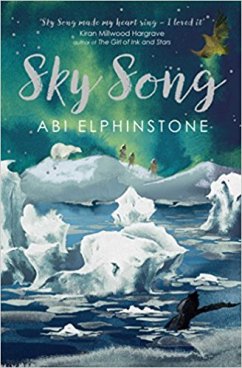
sky song

Sky Song by Abi Elphinstone

Recommended for 8+.

Frozen lands, snow, and the animals associated with it, have long been fascinating subjects for children’s books, whether it’s CS Lewis’s Narnia, Philip Pullman’s His Dark Materials, or indeed Santa Claus, and there are a clutch of such books around at the moment. This book is set in the frozen kingdom of Erkenwald which is tyranically ruled by the Ice Queen. It is an adventure story where a girl, Eska, breaks free from a music box where she has been held prisoner, and her friend Flint, a young boy. Together they have the potential to break the power of the Ice Queen.


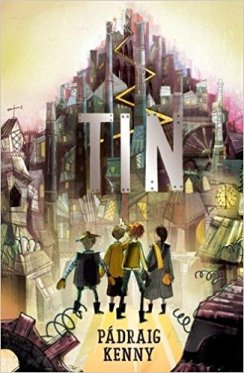
tinTin by Padraig Kenny

Recommended for 9+.

The cover makes me think this could be a modern day Wizard of Oz. It’s a debut novel from an Irish author and the central character is Christopher, an orphan who works for an engineer who manufactures ‘mechanicals’, a kind of robot. These become Christopher’s best friends and with them he sets out on a journey, following a devastating accident, and discovers things about himself and about what it means to be human.


the light jarThe Light Jar by Lisa Thompson

Recommended for 9-12.

Lisa Thompson’s first book, The Goldfish Boy, about a boy suffering from debilitating OCD, was hugely popular and has been shortlisted for Waterstones Children’s Book Prize 2018. This follow-up deals with similarly contemporary issues. Nate and his mother leave their home in the middle of the night. Nate’s mother does not explain why, but Nate thinks it has to do with her boyfriend Gary. When Nate’s Mum goes out for groceries and does not return Nate finds himself alone. He receives a visit from an old friend and between them they go on an adventure which may or may not help Nate resolve his troubles and be reunited with his Mum.


the-unpredictability-of-being-humanThe Unpredictability of Being Human by Linni Ingemundsen

Recommended for Young Adult readers

In this debut novel from a young Norwegian author, the central character is 15 year-old Malin who is struggling to cope with her dysfunctional family. Her father seems always angry, her mother has a drink problem and her older brother is remote, XBox-obsessed and gets into trouble. She also struggles with friendships at school until she finally meets Hanna, a girl with problems of her own, and together they navigate the challenges of growing up. A novel about fitting-in and finding your own way, against the odds, that will resonate with young female teens.


the final sixThe Final Six by Alexandra Monir

Recommended for 13+

It can be hard to find reading material that appeals to teenage boys, but this one might do the trick. Due out in early March it is action-packed science fiction, and has already been bought by Sony pictures for a film adaptation. Leo and Naomi are selected from among the world’s brightest teenagers for a mission to Europa, Jupiter’s moon, in order to establish a human colony, so grave has the threat to Earth become. As they undergo the rigorous training programme, Leo and Naomi begin to question the true motive of the mission, and become suspicious of their masters’ intentions.


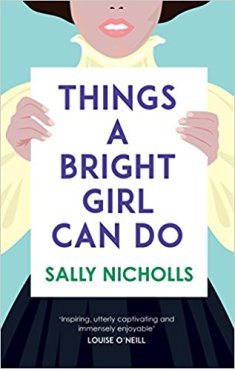
things a bright girl can doThings A Bright Girl Can Do by Sally Nicholls

Recommended for Young Adult readers.

An appropriate one for the month in which we celebrate the extension of voting rights to some women in the UK. This novel brings together three girls, Evelyn, May and Nell, each from very different backgrounds but who find common cause in the women’s suffrage movement. Evelyn enjoys a privileged lifestyle but resents the fact that the only expectation of her in life is to marry according to her family’s wishes, while her brother gets to go to university. May and Nell, from very different backgrounds, meet and fall in love, strictly forbidden at that time, and face their own challenges but are equally moved by the cause for women’s equality. This novel follows their separate stories whilst exploring the issues of the suffrage movement in the context of the era.

I hope there is something here that might pique the interest of some young people you know. Take them along to the bookshop or library to find out. And if they do read any of them, I’d love to hear what they think.

What books for kids have you seen that appeal to you?

If you have enjoyed this post, please subscribe to the blog by clicking on the ‘Follow’ button, and look for me on social media. 


Book review: “Just Fly Away” by Andrew McCarthy

I posted earlier in the week about getting your teenagers reading in the school holidays. Well, here’s a book they might like, and the author brings back memories of my own teenage years! Andrew McCarthy is better known as an actor and director (Pretty in Pink, St Elmo’s Fire), but in recent years has turned his hand to writing. This is his second book and his first work of fiction and is aimed at teenage readers. As regular readers of this blog will know I have launched an online reading challenge through Facebook, with a different genre or theme for each month. January’s was a YA novel, for which we read The Disappearances by Emily Bain Murphy. My book club decided to follow suit and we selected Just Fly Away. Just to warn you, this review contains spoilers, as I’m writing this for parents who might be looking for reading material for their teenagers and want to know what the book is about.

Just Fly Away img2

The central character in the novel is Lucy Willows, a 15 year-old living in New Jersey with her parents and younger sister, Julie. The novel opens with the family enjoying a day out at an amusement park on the Jersey Shore. It is a normal happy existence and Lucy’s life appears to be like that of any other teenager, a mixture of the humdrum and the special where family relationships go through the usual ups and downs. Then Lucy overhears a conversation between her parents about someone her father “would be proud of” and her fear and curiosity are aroused. She confronts her parents about it and they decide it is time to reveal to their daughters that Lucy’s father had an affair some years earlier which resulted in the woman having a child. The boy, Thomas, is now eight years old and lives in the same town.

Lucy’s world is turned upside down. It is important to note at this point that whatever issues there may have been between Lucy’s parents, they have put the matter behind them, and Lucy’s mother appears to be completely reconciled to her husband’s past infidelity and to have forgiven him. It is in fact she who started the conversation with her husband about Thomas. As an adult reader, I was inclined therefore to think a) it’s the couple’s business not Lucy’s, and b) so what? If they are over it, Lucy should accept it and move on too. But that is to miss the point, and one of the aspects of the book I really liked, the fact that the story is told entirely from Lucy’s point of view. Any parents of teenagers will know that they tend to see the world entirely from their own perspective, their capacity for empathy at this stage in their development can often be quite low, particularly where their parents are concerned! Therefore it is entirely credible that Lucy should react so strongly to the news and to have the reactions she does to her parents. She hates her father at this time and seems also to despise her mother for not having left him!

An important sub-plot to the novel, and which will broaden the appeal to young people is that Lucy develops a relationship with Simon, the older brother of a school friend. Simon is ‘different’; he has some sort of learning difficulty that is not fully explained, and goes to a different school. Simon is handsome, charming, warm, sensitive, and caring. He proves to be a great support to Lucy.

Lucy is curious about Thomas and finds out where he lives. She persuades Simon to go with her and the two make contact with him, without revealing the connection. Lucy thinks this encounter might help but instead it throws her into a tailspin. One day, whilst heading out to the shops, she decides on a whim to take the train to New York City and from there to travel to her grandfather’s house in Maine, whom she has met only once previously as there has clearly been a difficult relationship between him and Lucy’s father. Her journey is more than just a series of scary late night encounters and bus rides, it is a metaphor for her growing up and away from her parents, making it on her own, with limited funds and a new-found resourcefulness. Through the contact she then has with her grandfather, she glimpses some of the challenges to be faced in parent-child relationships and it helps her to reframe the situation she finds herself in with her own parents.

Spoiler alert…

Whilst Lucy is staying with her grandfather he has a massive stroke. Lucy’s father travels to Maine both to collect Lucy and to visit his Dad. Upon his arrival, Lucy’s father starts to ‘tell her off’ but it is clear that Lucy has grown out of this sort of admonishment and his reprimand seems hollow and out of step. Grandfather dies and this is an emotional element to the book, but I think this will be tolerable to teen readers because he is elderly and his peers seem to accept it as natural and not untimely. The event also serves to bring the family back together and into a new phase. Simon also makes the trip to be at the funeral for Lucy, and so he gets to meet her parents, and they seem to approve of him and accept their daughter’s maturity.

Lucy is a great character and not too feminine so I think even young male readers could identify with her. It’s a good story, easy to read and whilst Lucy, to an adult reader, might seem to overreact at times, it is a reminder that, as a parent it is important to realise that what may seem ‘small stuff’ to us can be ‘big stuff’ to them.

There is some light sexual content and occasional swearing. Recommended for 14-17 year olds and a nice read for grown-ups too!

Do you have any suggestions for YA novels for older kids to read?

If you have enjoyed this post, please follow the blog to receive notifications of future posts.