Next Thursday (20 September) sees the announcement of the shortlist for the 2018 Man Booker Prize, the foremost literary prize in the UK and one of the most important on the international calendar too. The longlist was announced back in July and I have to confess that I was not familiar with any of the novels listed. The shortlist comprises the six best novels, as agreed by the judging panel from their longlist of thirteen books.

This is an important year for the Booker as it celebrates its 50th anniversary. There was a special award made earlier this year for the Golden Man Booker, the best work of fiction from all the winners. The judging panel was a stellar cast and each chose their favourite work, as follows:
Robert McCrum – In a Free State (1971) by VS Naipaul
Lemn Sissay – Moon Tiger (1987) by Penelope Lively
Kamila Shamsie – The English Patient (1992) by Michael Ondaatje
Simon Mayo – Wolf Hall (2009) by Hilary Mantel
Holly McNish – Lincoln in the Bardo (2017) by George Saunders
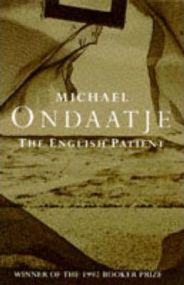 This shortlist was announced in May and the list was then put up for a public vote. My personal favourite of these was Wolf Hall. In 1983, the celebrate the 25th anniversary of the prize a “Booker of Bookers” contest was set up and three judges chose Salman Rushdie’s Midnight’s Children, which I probably agree with. It was good to see the vote open to the public this time rather than a small group of the literati, and the winner was The English Patient. I still remember reading that book for the first time the year it came out and then the wonderful movie with Ralph Fiennes and Juliette Binoche, which itself went on to win several Oscars including Best Picture.
The panel of judges this year includes Val McDermid, so you can be sure that one of their criteria will be whether or not it’s a great story, something, I think it’s fair to say, literary fiction does not always consider of the highest importance. That was my feeling about last year’s winner, sadly.
For the last couple of years I have set myself the task of reading the shortlist before the winner is announced in October. Last year I managed five out of the six, and I STILL have not completed Paul Auster’s 4321 – I want to, honestly, but it’s SO LONG! I will do the same again this year, although I note that we seem to have one less week than usual between the shortlist and the announcement of the winner on 16 October – yikes, less than four weeks! Let’s hope there are no more monster tomes!
So look out for the shortlist announcement this Thursday; it will probably make many of the news bulletins.
Do you plan to read the Man Booker shortlist?
If you have enjoyed this post, do follow my blog and connect with me on social media.


 I then saw Rupert Everett (with whom I fell in love years ago after his appearances in films Another Country and Dance with a Stranger in the mid-1980s) in conversation with Alan Yentob. Everett has just completed his film about Oscar Wilde, a passion project which it has taken over ten years to bring to fruition. There was a BBC4 Imagine documentary about it a couple of weeks ago.
 Finally, my last event of the day was hearing Turkish author Elif Shafak speaking about her new book The Forty Rules of Love. I reviewed her novel


 Last month, we battled our way through Madame Bovary, some enjoying it more than others, it has to be said. Our theme was a classic novel, and this can be a challenging genre. It can take you right back to schooldays and unhappy memories of working line by line through a text that had no relevance to your teenage life. And if you are out of the habit of reading classic, usually older, novels, the language can feel outdated, and hard work.
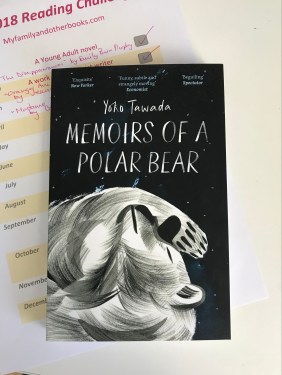 This months’s challenge is something altogether different – a children’s novel and I have chosen Memoirs of a Polar Bear by Yoko Tawada. This book first came to my attention before Christmas and I have been keen to read it ever since. It is written from the perspective of three different polar bears: the first , a female, who flees her homeland in Soviet Russia, the second, her daughter, a dancing bear in a Berlin circus, and the third, the most recent, born in captivity in Germany.


 The first book in the challenge (the theme is a Young Adult novel) will I hope be a nice one to start with – The Disappearances by Emily Bain Murphy. It’s part science fiction/fantasy, part coming to terms with love and loss.

