You would have to have been under a literary rock this last week or two to have missed the fact that the final part of Hilary Mantel’s Wolf Hall Trilogy, The Mirror and the Light, will be published on 5 March. An edited extract of the first chapter was published in The Guardian on Saturday – just savour these opening lines:
“Once the queen’s head is severed, he walks away. A sharp pang of appetite reminds him that it is time for a second breakfast, or perhaps an early dinner.”
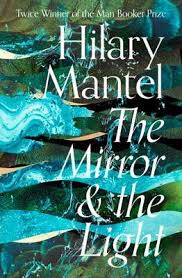 I think we can believe the hype – this is surely a writer at the top of her game! A few lucky critics who have had a preview have already tipped it for this year’s Booker Prize (parts one and two both won in 2009 and 2012). I am a huge fan of Mantel, ever since I read “A Place of Greater Safety”, a novel about the aftermath of the French Revolution. It was the book that really got me back into reading after I’d finished my English degree – I was all ‘read-out’ by the time I graduated, so this book saved me!
I am looking forward to reading The Mirror and the Light although at a stonking 912 pages, don’t expect a review any time soon!
 There are many other books to get excited about this year. Isabel Allende’s latest book A Long Petal of the Sea was published in English last month. It is a story about escapees from the Spanish Civil War arriving in Chile in 1939, their evacuation having been organised by the great national poet Pablo Neruda. I was lucky enough to attend a talk Isabel Allende gave in Manchester (with Jeanette Winterson!) a couple of weeks ago and she was every bit as impressive and inspiring as I expected her to be. AND I got a signed copy of the book!
Sebastian Barry’s sequel to the wonderful Days Without End, will be published next month. Called A Thousand Moons it follows the story of Winona, the native American girl adopted by the narrator Thomas McNulty and his lover John Cole. Later in the spring look out for Simon Armitage’s first collection of poetry to be published since he became poet laureate, Magnetic Field. Also, new novels from Tayari Jones, author of An American Marriage, winner of last year’s Women’s Prize, called Silver Sparrow, and Ottessa Moshfegh, whose thriller Eileen was one of the highlights of the 2016 Man Booker shortlist. Her new novel is called Death in Her Hands and promises to be another novel of drama and suspense when a woman comes across a mysterious note in the woods. I am also looking forward to the next Marwood and Lovett novel from Andrew Taylor – I loved The Ashes of London and The Fire Court and am about to start The King’s Evil. This is a really interesting series of books.
Highlights of the summer for me will be a new novel from the wonderful Elena Ferrante called The Lying Life of Adults, about adolescent shame, set, like her Neapolitan novels, in Naples. Also, the final part of Ali Smith’s Seasonal Quartet, Summer; I read Autumn in 2017 when it was shortlisted for the Man Booker, and recently reviewed Winter. Better get on and finish Spring! Another book that will be hotly anticipated this summer will be the new one from Curtis Sittenfeld, author of American Wife, a book I loved. The new one is said to be about Hillary Clinton and is as yet untitled.
Information on what we can expect in the second half of the year is naturally a bit more sketchy, although I believe there are new novels from Caitlin Moran, Nick Hornby, comedian and Pointless presenter Richard Osman, and William Boyd. On the non-fiction front, I am excited by the prospect of memoirs from Manchester’s punk performance poet John Cooper Clarke, and from trans US military whistleblower Chelsea Manning.
So, it looks like my TBR list for 2020 has well and truly written itself!
There will be plenty more releases announced as the year goes on, and I like to post every few months on what’s coming up, so watch this space.
What new releases are you looking forward to this year?
If you have enjoyed this post, I would love for you to follow my blog. Let’s also connect on social media.
 By the strangest of coincidences, I have also just read two books which also explore issues of race and class. Rebecca Skloot’s non-fiction work The Immortal Life of Henrietta Lacks, and The Water Dancer by Ta-Nehisi Coates. Skloot’s book is a detailed and complex account of one woman, Henrietta Lacks, an African-American woman from Virginia who died in 1951 from aggressive cervical cancer. The cancer cells from her body were special and unique because they were the first ever cells that were able to not only survive outside their host, but were able to continue to thrive and reproduce, at a rapid rate. This perhaps accounts for the very aggressive nature of Henrietta’s disease. Scientists used these cells, known universally as HeLa cells, to create trillions and trillions more of them, which have been used ever since, worldwide and have been directly responsible for the development of life-saving drugs and treatments, for example for polio. The key to the story, however, is that Henrietta died without ever having been advised about or consenting to the use of her cells in this way, neither did her family, and none of her surviving relatives have been given any financial compensation. What makes the story all the more shocking, however, is that Henrietta died at a time of segregation, and almost certainly did not receive the same level of care and respect as a white woman would have done. I will write more about this book in a future post because it is a fascinating story.
 The other book I have been reading, The Water Dancer, concerns the story of Hiram, a black slave also in Virginia in the mid-1800s. His mother was also a slave, but his father was a slave-owner, who allowed his son some elementary education after his mother’s death and then, when he was in his teens, gave him the special status of being the personal servant to his white half-brother, Maynard, the heir to their father’s estate. Hiram is also the grandchild of legendary slave Santi-Bess, one of the original transported Africans who is said to have had magical powers (Conduction), although it does not become entirely clear what these are until towards the end of the book. The first significant glimpse of this is when, whilst chaperoning Maynard on a drunken night out, the two young men somehow end up in the river. Maynard drowns but Hiram somehow emerges alive. The events which follow Maynard’s death eventually afford Hiram the opportunity to escape slavery via the Underground and he soon becomes an agent of that cause. It is not a straightforward choice for him, though, as he is forced to confront traumatic memories of his mother, who died when he was very young, and to face the many complex facets of slavery, its consequences, its victims and what it means to be free.
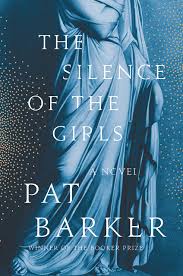 The Silence of the Girls has been critically-acclaimed and was shortlisted for last year’s Women’s Prize for Fiction. I really, really wanted to love this book, but I’m afraid I didn’t. It could be that the timing was wrong – December for me was mad busy so I read the book in short bursts over a longish period when I was quite stressed. I don’t think I gave it the time and attention it deserved. But then, neither did it really grab me when perhaps it ought to have done.
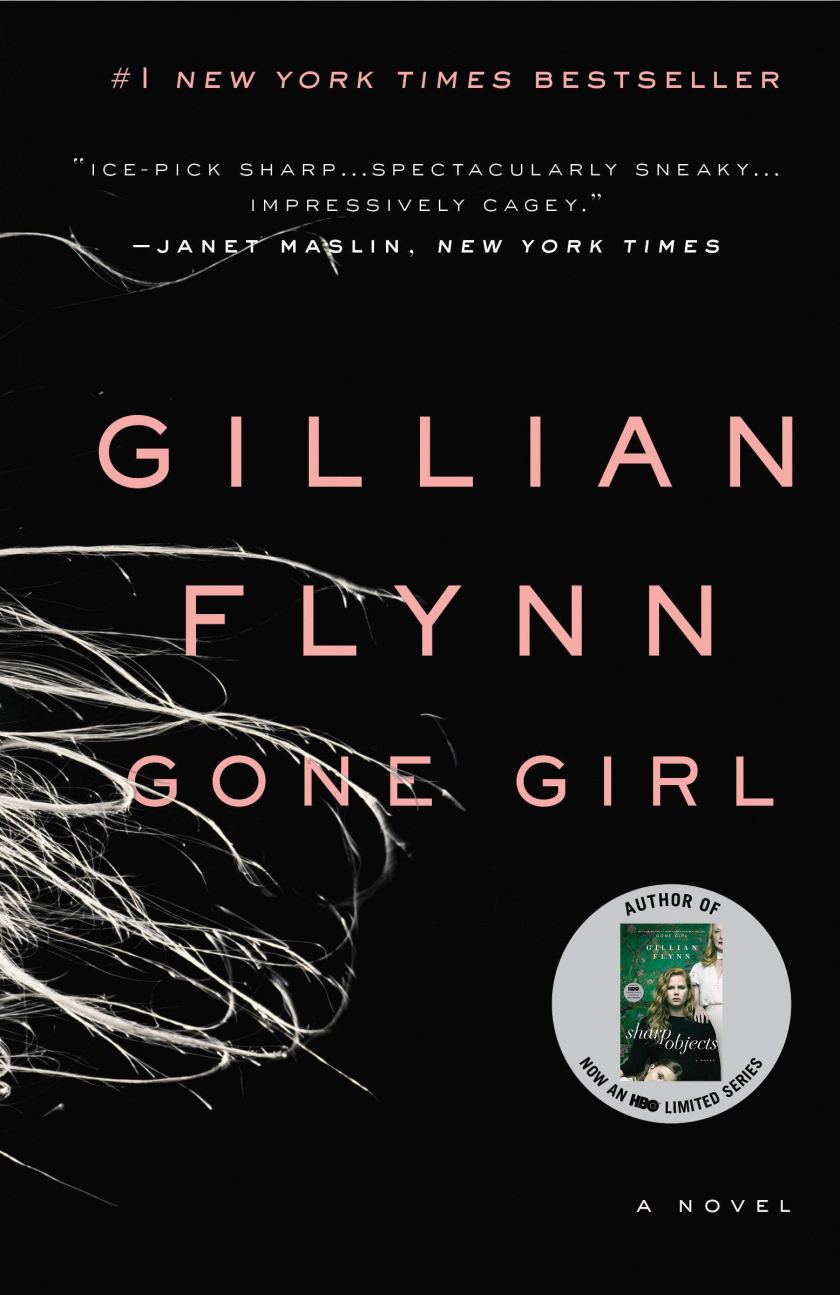 This book grabbed me by the throat right from the outset; I listened to it on audio (fantastic performances from the actors Julia Whelan and Kirby Haborne, by the way) and simply could not ‘put it down’. I got a lot of exercise in January, because going for a walk became an excuse to listen to a few more minutes’ worth!

 In Winter, Ali Smith examines the ideas through the dynamics of a family thrown unwillingly together at Christmas. Sophia lives alone in a large house in Cornwall. She was a successful businesswoman but, now late in life, finds herself alone, estranged from her sister, not knowing what is going on in the life of her only son in London, and navigating with despair some of the dehumanising aspects of modern life. When we meet her at the start of the book, she is communicating with what I can only describe as a hallucination of a child’s head, which floats about with her. To the reader, this seems surreal at first, but it gradually becomes merely a manifestation of Sophia’s mental state – her deep loneliness and her disconnection from normal life and society. Arthur, Sophia’s son will have similar hallucinations later in the book. Sophia goes about her Christmas Eve business in the town with sadness, recalling the once vibrant high street that is now a series of boarded-up shops, frustrated at being unable to withdraw money from her own bank account and the inability of the young man in the bank to appreciate or meet her needs as a customer – she has nostalgia for the days of the friendly bank manager.

 A book I listened to at the end of last year was Ashes of London by Andrew Taylor. I borrowed it from the library when it was first published in 2017 but did not manage to get through it before I had to return it for someone else. It is a historical thriller set at the time of the Great Fire of London in September 1666 and is the first in Taylor’s Marwood & Lovett detective series. I have not yet read (or listened to) the second and third books in the series, both of which were published last year, but they sound intriguing.
 Last week I launched my

 It is truly a groundbreaking novel, but curiously, in my view, less in its own right than as an extension, a continuation of, the work started with the publication of The Handmaid’s Tale in 1985. What is also partly so extraordinary about The Testaments is how relevant its story remains over thirty years on from The Handmaid’s Tale. In spite of equality legislation, human rights legislation, more women in positions of power and authority, we still have world leaders able to express their misogyny openly and with impunity, and violence against women and girls seems as rife as ever. Atwood is Canadian, but her novel is a dystopian vision set in the United States, where, in the last year, we have seen the erosion of women’s reproductive and therefore health rights in some states and the substantial threat of more to come. This novel seems so urgent and necessary.


